APPROVED SUPPLIER PROGRAM
THE ARCHITECTURE OF THE DOCUMENTARY FILTER, HIDDEN COSTS, AND CONTRACTUAL SHIELDING IN SUPPLIER SELECTION
I. Introduction: The Myth of the Free Market and the Urgency of Administrative Customs
In the corporate environment of hospitality and foodservice, senior management often operates under the false premise that the supply market self-regulates through ethical criteria and free competition. The traditional manager naively trusts that an attractive sales portfolio and a valid operating health permit—which often represents merely the minimum legal baseline for compliance—are sufficient credentials to authorize a new supplier’s entry into the company’s value chain. However, for a Foodservice Management Professional (FMP), this administrative passivity constitutes an unacceptable financial and biological vulnerability. Absolutely mitigating reputational, legal, and cash flow risk demands understanding that true business profitability is not decided at the dining room counter; it is designed, shielded, and executed at the strategist’s desk. The skeletons hidden in the operational closet of procurement are the hidden liabilities and fraudulent practices allowed into the value chain through a weak supplier filter.
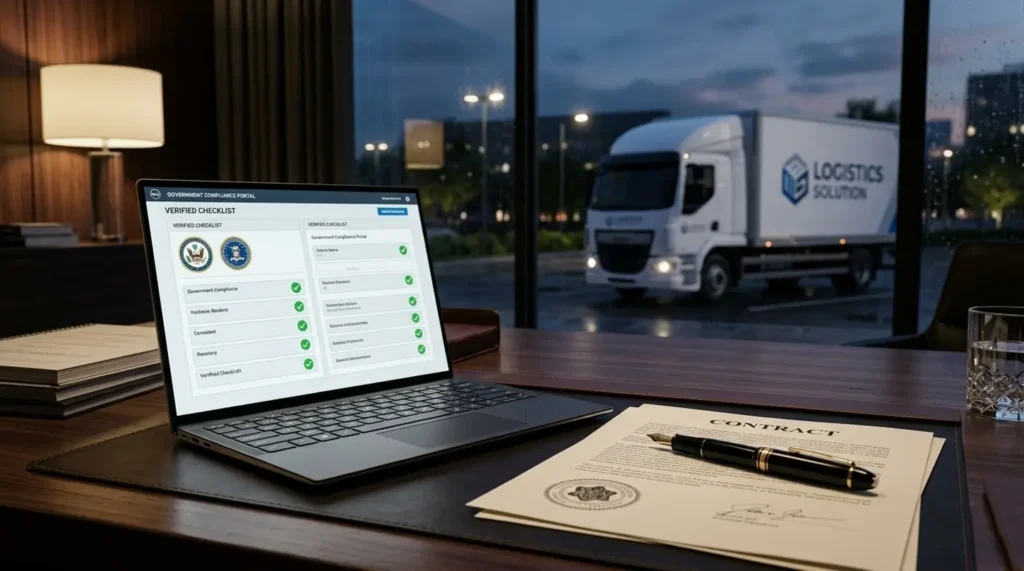
Signing a purchase order or issuing a supply contract without subjecting the candidate to meticulous technical scrutiny is opening the organization’s floodgates wide to hidden liabilities and fraudulent practices structured at the source. The FMP operates under the Kiyosakian maxim that real profit is secured at the exact moment of purchase, not at the moment of selling the final service. Therefore, building a robust approved supplier program (Approved Reputable Suppliers) does not respond to a technical whim, a bureaucratic formality, or a decorative addition for quality audits; it is a senior management financial decision yielding immediate returns, specifically designed to protect shareholders’ investment capital, eliminate operational shrinkage before it manifests in the plant, and consolidate a profitable and Prussian culture of food safety.
II. The Mirages of Nominal Savings: Chemical Fraud and Market Baits
To convince the most skeptical management committees of the urgency of structuring this administrative filter, the FMP utilizes the analytical dissection of the most widespread commercial frauds in the hospitality sector. One of the sharpest and most expensive pain points is located in the procurement of chemical supplies for sanitation and maintenance. The market is saturated with unscrupulous distributors who approach managers chasing exclusively the lowest price per gallon. The scam on this front is as common as it is perverse: suppliers dilute formulas of detergents, degreasers, and disinfectants (Sanitizers) that had already come watered-down from the factory, masking the molecular adulteration through the massive addition of industrial pigments and intense synthetic fragrances to simulate a non-existent concentration. Introducing these products stripped of their active ingredients destroys the biological efficacy of sanitization and damages the automatic injection components of heavy washing machinery, causing apparent savings to transform into a cumulative overcost due to duplicated product consumption and expensive corrective repairs.
This same predatory market tactic manifests in an even more dangerous manner when informal suppliers attempt to seduce novice or naive directors by offering «magic» cleaning products that completely lack food-grade specifications, NSF certifications, or validated safety data sheets. A critical example is the commercialization of high-potency degreasers formulated with butyl, a powerful organic solvent derived from hydrocarbons. Butyl possesses an impressive mechanical capability to rapidly dissolve carbonized grease on exhaust hoods and flat-tops, reducing the brigade’s working times, but it carries a catastrophic liability: it is highly volatile, toxic by inhalation for human capital, and leaves persistent chemical residues that attack the molecular structure of stainless steel, destroying the fixed asset and risking the safety of contact surfaces. Without a strict documentary filter intercepting and vetting these adulterated or hazardous chemical supplies at the desk, the manager becomes an involuntary accomplice to the destruction of the organization’s heritage and health.
III. The Anatomy of the Hidden Cost in Intangibles: Training and Calibration
The analysis of the documentary filter must obligatorily extend toward the microscopic evaluation of commercial offers, dismantling the contractual terms of heavy input and technological service providers to identify financial liabilities camouflaged within low-cost proposals. An aggressively low economic offer from a provider of chemical consumables or specialized machinery is usually the perfect bait to lock in a long-term contract. The FMP elevates the company’s commercial intelligence by reading the agreement’s fine print, detecting whether fundamental variables of preventive maintenance, emergency technical support, periodic calibration of injection systems, and mandatory training for the personnel operating the resources are included or excluded from the total cost of acquisition.
If the supplier does not explicitly and institutionally absorb the cost of systematically training the human brigade in the correct and safe use of their dosing systems, the corporation’s return on investment is immediately diluted into operational negligence, workplace accidents due to chemical burns, and uncontrolled shrinkage caused by empirical product overutilization. The untrained operator tends to dose by visual intuition or «scent», burning through a month’s projected inventory in a single week and altering the safe dilutions stipulated in the Food Code. The FMP does not authorize the purchase of a simple gallon of disinfectant or a dishwashing machine; they acquire a global systemic solution. Contractually demanding that the manufacturer provide technical competence certifications for their advisory personnel and assume responsibility for transferring knowledge to the brigade is the sole strategy that shields operational efficiency, transforming the administrative purchasing process into a tool that generates profits long before opening the establishment’s doors to the market.
IV. Program Tools: Technical Due Diligence Forms
To materialize this strategic shield and eradicate decisions based on the salesperson’s commercial likability, the FMP designs and implements an arsenal of mandatory documentary tools that every aspiring supplier must complete with absolute transparency before being evaluated by the purchasing committee. The backbone of this phase is the Supplier Qualification RFI, an exhaustive technical brief functioning as the organization’s first selective filter.
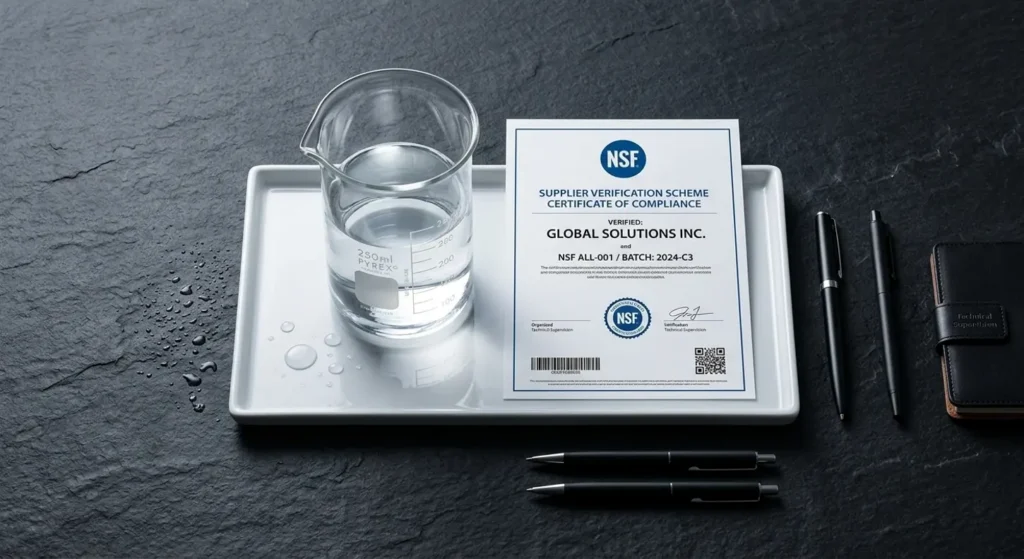
This documentary questionnaire is not limited to compiling ordinary mercantile data; it demands the mandatory delivery of specific scientific and regulatory evidence:
- Official Sanitary Accreditation: Certified copy of the operating permits for the origin plants issued by competent ministries of health or federal agencies, guaranteeing adherence to the minimum legal compliance framework.
- Technical and Safety Data Sheets (SDS/MSDS): Molecular chemical breakdown of components, maximum residue limits, active ingredient concentrations, NSF certifications, letters of food-grade guarantee for lubricants, and specific protocols for first aid and neutralization.
- International Food Safety Certifications: Audited evidence of the functioning of HACCP systems, ISO 22000, or schemes validated by the GFSI (Global Food Safety Initiative) at the supplier’s production and packaging centers.
- Logistical and Contingency Guarantees: Detailed statements regarding raw material traceability, installed storage capacity, contingency plans facing stock depletions, and formal product recall (Product Recall) protocols in the event of global sanitary alerts.
V. The Online Platform: Automation of Supply Control
Sustaining an approved supplier program over time demands abandoning archaic methodologies of physical paper archiving or passive control via static spreadsheets in shared managerial folders. Efficient governance of a dynamic supply chain requires the FMP to drive the creation or implementation of an online system or automated digital mechanism for the continuous management and update of the authorized suppliers’ documentary files.
This digital platform centralizes technical and financial communication, operating under a shared responsibility scheme where the supplier itself assumes the obligation to keep its credentials active on the network. The system is configured to emit automated alerts prior to the expiration of sanitary operating permits, refrigerated transport licenses, or international certification audits, automatically blocking the issuance of new purchase orders if the distributor’s file displays any documentary gap or temporary non-compliance. Furthermore, this digital channel functions as an open, two-way communication environment: it allows the FMP to notify variations in the business’s volumetric needs, instantaneously update internal purchasing policies, and incorporate requirements regarding new operational skills or packaging technologies, forcing the supply ecosystem to evolve at the corporation’s pace and eliminating the administrative friction that slows down commercial operations. Many of these solutions are commercialized as add-on modules within the wide array of Enterprise Resource Planning (ERP) or administrative system software for the hospitality industry.
VI. Conclusion: The Desk as an Unnegotiable Trench for Profitability
In conclusion, deep analysis of the documentary phase conclusively demonstrates that the financial and biological success of a high-performance food operation is determined before merchandise ever travels toward urban centers. Attempting to manage a hospitality business by delegating supplier selection to the empirical dynamics of blind quotes or the lowest nominal invoice cost is a mediocre administrative strategy leading directly to operational collapse, chemical fraud, and incalculable legal liabilities. Profitable food safety and shareholder return on investment are not the result of chance on the line of fire; they are firmly conquered at senior management’s desk.
Building an approved supplier program based on the rigidity of technical due diligence forms and sustained through automated digital platforms is the sole administrative praxis projecting the FMP’s multidisciplinary profile as an authentic business strategist. The sector’s true leader does not wait for biological risk to strike the kitchen to react; they intercept it during the contractual phase, forcing the supply chain to integrate under unnegotiable scientific standards. Acting from FMP Way on this front means transforming documentary management into the organization’s strongest and most secure competitive advantage, ensuring that every dollar injected into the market protects diner’s lives, optimizes operational costs, and consolidates corporate heritage against the invisible challenges of the contemporary market.
Angelo Campione ─ FMP