SHOWING YOUR TRUE COLORS
BEYOND THE COLOR-CODING DOGMA IN FOOD SAFETY
In the restaurant and food & beverage service industry, the color-coding system is often presented as a rigid and inflexible rule. However, in the actual management of a professional kitchen, the standard does not seek to impose an aesthetic code, but rather to create a homogeneous operational protocol against the invisible risk of cross-contamination.
At its core, an effective HACCP (Hazard Analysis Critical Control Point) system is not intended to penalize an operator’s existing inventory, but to establish a clear visual language. Understanding the international standard not as an immovable dogma, but as an operational communication tool, is the key to preventing Foodborne Illnesses (FBIs) without compromising business profitability.
The Suggested International Standard
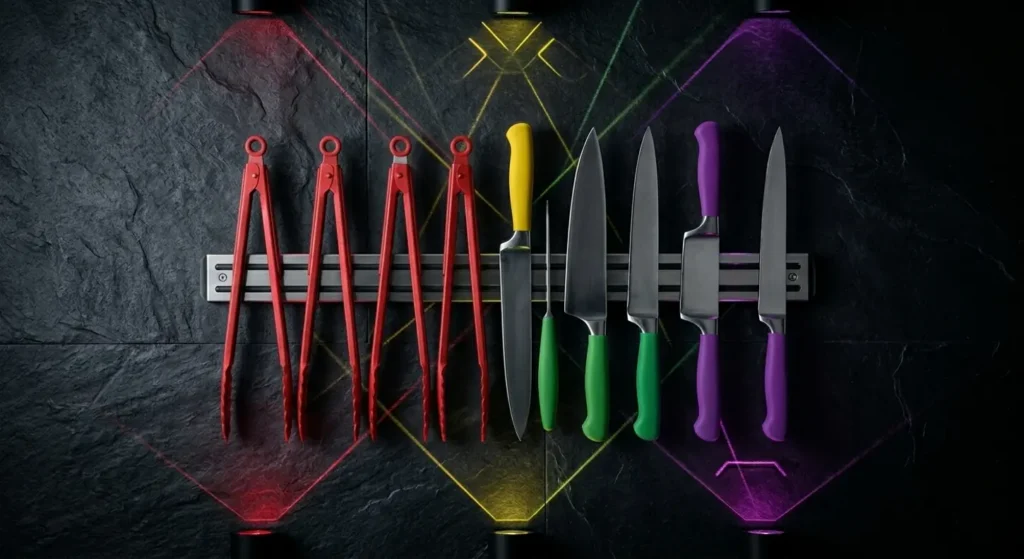
Below is the most widespread international standardization for the use of cutting boards, knives, utensils, and kitchen towels:
1. Color-Coding by Food Category
Each color is strictly assigned to a food family to prevent the mixing of fluids, odors, allergens, and bacteria:
- Red:
Use: Raw red meats (beef, pork, lamb).
Main Risk to Prevent: Escherichia coli and enteric pathogens present in uncooked red meat.
- Yellow:
Use: White meats / Raw poultry (chicken, turkey, rabbit).
Main Risk to Prevent: Salmonella spp., very common in poultry.
- Blue:
Use: Fish, shellfish, and seafood (raw).
Main Risk to Prevent:Vibrio, parasites (Anisakis), and marine bacterial contamination.
- Green:
Use: Fruits, vegetables, and fresh produce.
Main Risk to Prevent: Cross-contamination from soil, parasites, or fecal bacteria carried by raw produce when they do not undergo subsequent thermal treatment.
- Brown (or Tan):
Use: Cooked meats and cold cuts / sausages.
Main Risk to Prevent: Preventing already processed or ready-to-eat products from coming into contact with surfaces that have touched raw meat.
- White:
Use: Dairy, cheeses, bread, pasta, and pastries.
Main Risk to Prevent:Cross-contamination in products generally consumed directly without additional cooking.
- Purple / Violet (in advanced regulations):
Use: Foods for special diets / allergen-free (gluten-free, kosher, vegan, or specific allergy products).
Main Risk to Prevent: Anaphylactic shock or cross-contact by food allergens (soy, gluten, sesame, fish, shellfish, dairy, peanuts, tree nuts, eggs).
2. Integration with Knives and Utensils
For the system to be truly effective, color-coding should not be limited solely to cutting boards (usually high-density polyethylene), but extended to cutting and handling tools:
- Knife Handles: Professional knives usually incorporate color-coded handles matching the assigned board (a red handle for red meats, green for vegetables, etc.). Reusing a knife across different stations without intermediate sanitizing is a direct vector for Foodborne Illnesses (FBIs).
- Preparation and Service Utensils: Tongs, spatulas, ladles, and strainers must also be segregated, especially those in direct contact with allergens or raw meat areas versus cold station and salad zones.
3. Critical Handling of Towels and Textiles
Poorly managed kitchen towels are one of the most important vectors of massive cross-contamination in a professional kitchen.
- Identification by Color or Weave: Just like cutting boards, towels for surface cleaning, hand drying, and dish drying must be differentiated by color (e.g., blue towels exclusively for bar/table surfaces, red for meat areas, etc.) or disposable paper towels should be used for high-risk zones.
- Rotation and Laundering: Reusable fabric towels must be constantly disinfected and washed at high temperatures; a damp towel left on a tabletop for hours becomes an ideal breeding ground for the exponential growth of bacteria.
The Confusion: The Standard as an Operational Suggestion Is NOT a Dogma
For you as the operation manager, your fundamental duty is to efficiently combine food safety measures with operational procedures in an environment that takes financial sense into account.
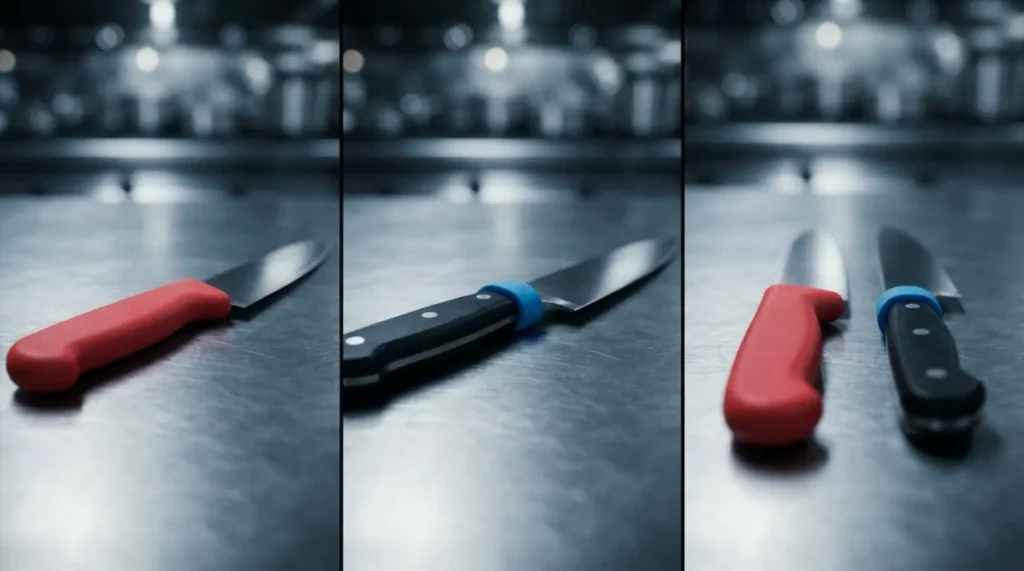
Let’s say your operation only sells beef burgers; operationally, the colors blue and yellow in boards, towels, and utensils will not be present in your facilities. But what happens if your operation, for example, features built-in white polyethylene cutting surfaces integrated into the structure, or holds inventories of brand-new polyethylene boards as well as in-use and unissued stainless steel utensils that lack color-coded handles or markers? Are those items violating any health regulations?
«Absolutely NOT».
The only real impact sought by color-coding is to create a standard of visual communication with the objective of distinguishing which tasks certain items are used for. Colors facilitate this distinction and allow the use or deployment of these items to be segregated, considering what foods they will handle or, in the case of cleaning supplies, which are used for areas away from food contact and which are for contact areas.
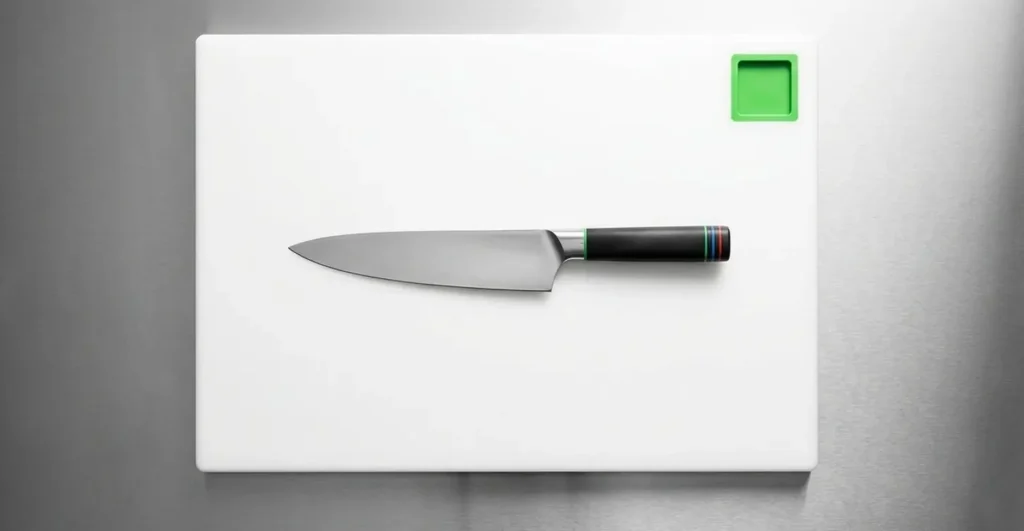
You, as the operation manager, must adopt a standard or create one that allows you to differentiate the utensils used in each task to prevent them from intermingling, and that also makes sense within your processing flow, considering your equipment inventories.
- Consult with polyethylene suppliers or local specialized workshops to adapt your existing white boards and code them by embedding a colored polyethylene plug in one corner.
- Many food industry equipment suppliers offer colored silicone sleeves or handles to code and differentiate knives, tongs, spatulas, and similar tools.
Always keep in mind that the goal is to prevent cross-contamination and cross-contact, and for this, the most important thing is that the color-coding system you adopt fulfills the purpose of being clear and understandable for your staff. In this sense, providing a standard along with the equipment, constant supervision, and continuous training are fundamental to successfully achieving the goal.
Additional Operational Best Practices to Maximize Prevention
- Correct Storage: Cutting boards must not be stored stacked on top of each other while damp, as this promotes the proliferation of fungi and bacteria. They must be stored in slotted vertical racks that allow airflow and complete drying.
- Wear and Tear Control: Polyethylene boards with deep grooves, excessive cuts, or warping lose their sanitary condition, as microplastics and deep scores trap organic matter that is impossible to clean. They must be resurfaced, shaved, or discarded according to the establishment’s HACCP protocol.
Ultimately, the color standard is not about stacking up expenses or discarding functional assets. It is about compelling every element of the operation to show its true colors through zoning, intelligent inventory adaptation, and operational discipline. When staff understand the purpose behind each tone—whether through a polyethylene plug, laser marking, or a designated station—food safety ceases to be a bureaucratic requirement and becomes a living standard that protects both the consumer and the company’s capital.
Angelo Campione – FMP