CONTAMINARIUM – 3/8
CATALOG OF FOOD AGENTS AND HAZARDS — BIOLOGICAL HAZARDS: FUNGI, MOLDS, AND YEASTS
While chemical hazards act through sudden poisoning and mechanical agents through immediate physical trauma, biological hazards represent the living and replicating threat in the kitchen. In this third installment of the Contaminarium, we delve into the fungal kingdom (Fungi). Supervisors and operators must shatter the classic myth that mold is a purely aesthetic issue solved by «cutting off the bad part» of bread, fruit, or vegetables. Pathogenic fungi, their spores, and their heat-stable by-products constitute a silent enemy whose skeletons are hidden in the operational closet of inventory rotation failures, deficient control of ambient relative humidity (levels exceeding 60%), and a false confidence in thermal cooking.
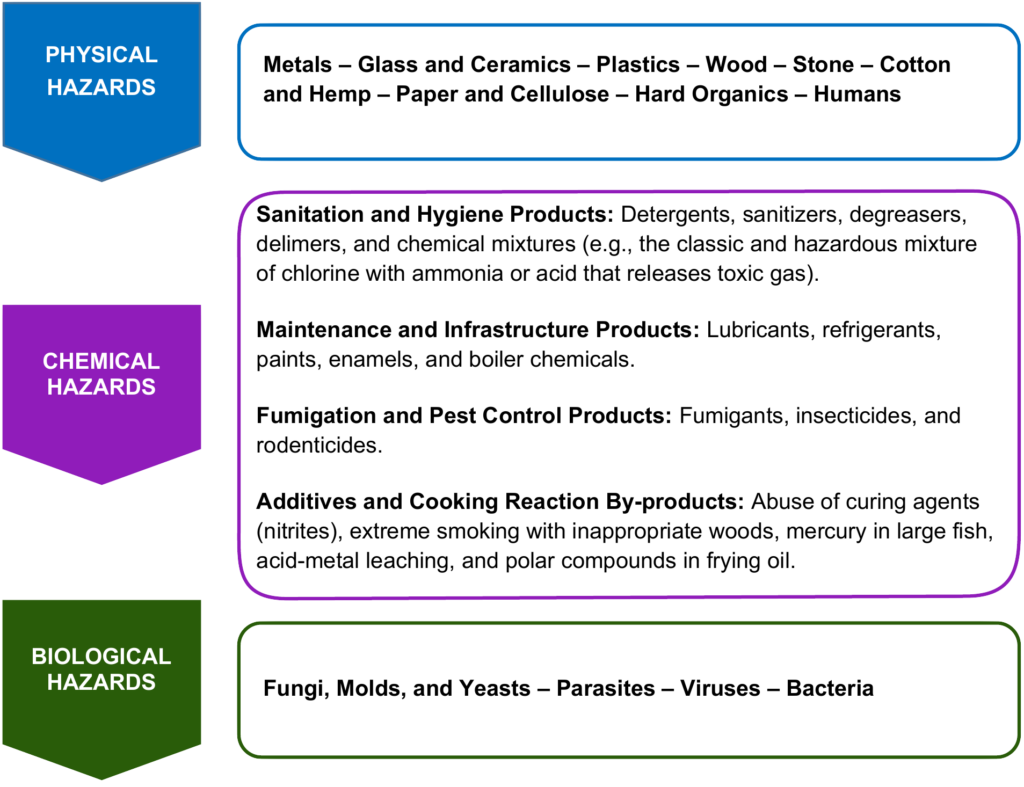
Biological Specimens: Taxonomy of Pathogenic Fungi, Molds, and Yeasts
Specimen A: Rhizopus stolonifer (Black Bread Mold)
A filamentous fungus belonging to the zygomycetes, characterized by its geometric growth rate and its invisible «fishing net» structure that colonizes complex carbohydrates.
- The Enemy’s Profile: This fungus is not limited to the surface. Its anatomy consists of rhizoids (root-like structures that anchor deeply into the bread crumb to absorb nutrients) and stolons (networks of aerial hyphae). What the human eye perceives as «black or gray fuzz» is merely the reproductive organ of the fungus (the sporangia) releasing millions of spores into the kitchen air. By the time the fuzz appears, the interior of the bread is already completely branched and invaded.
- Kitchen Vectors: The «saved» slice during the breakfast rush. A loaf of sandwich bread or an artisan loaf for toast service shows a small greenish-black spot on one corner. Pressed for time, the breakfast-station operator cuts off the affected corner with a serrated knife, assumes the rest is clean, and toasts the bread for the customer.
- Physiological Effect: Immediate gastrointestinal disorders (nausea, colicky pain). In individuals with compromised immune systems (highly common in healthcare hospitality or eldercare facilities), it can trigger zygomycosis, an invasive fungal infection that attacks the paranasal sinuses and lungs.
- Kitchen Control Practice: Total and immediate disposal of the entire bag or batch of bread if a single piece shows visible signs of sporulation. Porous food items can never be «saved» by cutting off fragments.
Additional Case Study: The «Biological Bomb» of Homemade Bread Pudding
A critical scenario of mass contamination occurs during the informal reprocessing of stale bread that has begun to sporulate. The domestic operator removes the visibly molded fragments and uses the remainder of the crumb — which is already densely branched with invisible rhizoids — to make traditional bread pudding. To do this, the bread is soaked in a mixture of milk, eggs, and high concentrations of refined sugar, inadvertently providing a feast of simple carbohydrates ready to accelerate fungal metabolism.
The Thermal Skeleton: During baking, the pudding mass is an extremely poor heat conductor; its core temperature barely exceeds 180°F (82°C) at the peak of the cooking cycle. While this temperature temporarily slows down the active reproductive phase, it is completely insufficient to inactivate embedded latent spores and heat-stable mycotoxins. As the pudding is removed from the oven and allowed to cool gradually, the internal temperature slowly drops into the Temperature Danger Zone (TDZ) established by the Codex Alimentarius (between 41°F and 135°F / 5°C and 57°C). Upon reaching this ideal exponential multiplication range, and with an overdose of sugar available as cellular fuel, surviving spores germinate massively. Consequently, Grandma’s beloved bread pudding mutates into a vehicle for acute fungal poisoning capable of sending an entire family straight to the emergency room.
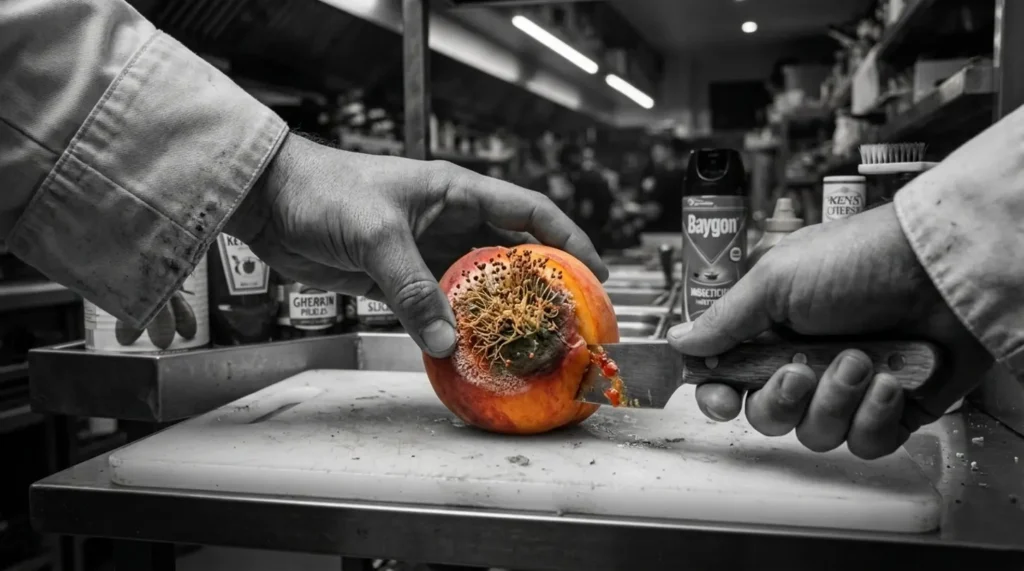
Specimen B: Neurospora sitophila (Pink or Orange Mold of Fruits and Bakeries)
An ascomycete fungus characterized by aggressive and explosive growth, notorious in the industry for its latent thermal resistance and bright salmon or orange coloration.
- The Enemy’s Profile: This is the terror of bakery and ripe-fruit storage areas because its spores are extremely lightweight and travel through ventilation ducts at high speeds. It fiercely colonizes simple sugars and exposed starches. Its mycelium secretes enzymes that rapidly break down fruit cell tissues, liquefying them from the inside out while the fungus expands outward in dense orange masses.
- Kitchen Vectors: The «cleaning» of fruit for the bar or buffet. A pineapple, a batch of juicing oranges, or a melon displays a soft area covered by a subtle, powdery, orange-pink crust. The bartender or buffet attendant cuts off the soft section of the fruit, washes the rind under running tap water, and processes the rest for the bar syrup or the buffet fruit bowl. Mechanical spores contaminate the knife, the cutting board, and the blender, distributing the fungus across the entire service line.
- Physiological Effect: Severe allergic reactions via spore inhalation or ingestion, mild respiratory distress (baker’s asthma), and acute gastric irritation due to the assimilation of fungal metabolic compounds that alter stomach pH.
- Kitchen Control Practice: Rigorous inspection of fruits upon receiving. Any fruit with altered consistency (softness) and the presence of orange powder must be rejected. Wash and sanitize the area surrounding the contaminated fruit with chlorine solutions at 200 ppm to inactivate airborne spores suspended on the shelves.
Specimen C: Aspergillus, Penicillium, and Fusarium Molds (Mycotoxin Producers)
Advanced multicellular fungal structures that develop visible hyphae on long-term storage foods, capable of synthesizing highly toxic chemical compounds known as mycotoxins.
The Enemy’s Profile: These genera colonize substrates invisibly before blooming and releasing spores. The true danger lies in their heat-stable secondary metabolites (such as Aflatoxin, one of the most potent biological carcinogens on the planet), which penetrate food tissues and resist standard commercial kitchen cooking methods.
Kitchen Vectors: Abuse of humidity in dry storage rooms (sacks of flour, rice, nuts, or coffee beans kept in warehouses with relative humidity exceeding 60% or in direct contact with the floor without pallets). It also includes the malpractice of scraping the surface mold layer off a block of hard cheese or aged ham and using the rest for service, ignoring that toxins have already invaded the core of the block.
Physiological Effect: Severe fungal poisoning or chronic mycotoxicosis. It causes severe liver damage (hepatotoxicity), liver cell necrosis, immune system suppression, and, long-term, hepatocellular carcinoma.
Kitchen Control Practice:
- Absolute prohibition of trimming or scraping soft or porous foods (bread, soft cheeses, sauces, fruits) that present surface mold; they must be completely discarded immediately.
- Maintain dry storage under strict control: temperature between 50°F and 70°F (10°C to 21°C) and maximum relative humidity of 50% to 60%, ensuring all sacks are placed on washable plastic pallets at least 6 inches (15 cm) off the floor.
- Rigidly enforce the FIFO (First In, First Out) inventory system to prevent the stagnation of raw materials.

Specimen D: Wild Macrofungi and Intrinsic Toxins (The Foraging Risk)
Higher fungi or mushrooms that contain natural poisons and potent, destructive cellular chemical compounds within their structures, introduced into the menu through supply chain failures.
The Enemy’s Profile: Lethal species such as Amanita phalloides or Gyromitra esculenta contain amatoxins and gyromitrin—biological compounds that resist the heat of boiling, baking, or dehydration. Their physical appearance is easily confused with edible wild mushrooms by amateur foragers.
Kitchen Vectors: Purchasing fresh mushrooms from unapproved vendors, independent local foragers, or enthusiasts riding «organic» or rustic trends, thereby bypassing certified and audited commercial distribution channels.
Physiological Effect: Mycetism (severe mushroom poisoning). It causes the collapse of the digestive system within a few hours, followed by the massive destruction of liver and kidney cells (acute hepatic and renal failure), hallucinations, coma, and a high mortality rate due to multiorgan failure.
Kitchen Control Practice:
- ServSafe/NRAEF Golden Rule: Purchase mushrooms solely and exclusively from approved, regulated suppliers certified by health authorities, ensuring complete traceability and exact botanical identification of the variety.
- Reject any shipment of fresh mushrooms that does not arrive in its original sealed packaging with its respective phytosanitary certification label.
Specimen E: Pathogenic Yeasts and Cellular Spoilage (The Enemy of the Bar and Cold Station)
Microscopic unicelular fungi that, while fundamental to controlled industrial fermentation (bread, beer, wine), act as massive spoilage agents in high-sugar or high-acid foods when time and temperature controls are lost.
The Enemy’s Profile: They colonize free environmental sugars and acids, triggering uncontrolled fermentation processes that alter the organoleptic properties of foods, degrading them through the production of residual alcohols and gases.
Kitchen and Bar Vectors: Keeping bottles of simple syrups for cocktails, fruit juice concentrates, jams, or sweet dressings at room temperature at the bar for prolonged periods—directly entering the Codex TDZ (above 41°F / 5°C). It also includes a lack of sanitation on nozzles and pourers of soda dispensers or juice taps, where yeasts proliferate to create slimy biofilms.
Physiological Effect: Mild gastrointestinal distress, severe heartburn due to the accumulation of fermentation alcohols, and immediate customer rejection due to the acetic (vinegar-like) odor and unpleasant bubbling of the spoiled food.
Kitchen and Bar Control Practice:
- Immediately discard any juice, sauce, or dressing that exhibits bubbling, gas condensation inside the container, an alcoholic odor, or an unnatural sour taste.
- Keep all syrups, sweet sauces, and concentrates under strict refrigeration below 41°F (5°C) once opened, ensuring they exit the danger zone.
- Establish a daily protocol for dismantling, washing, and deeply sanitizing all nozzles, pourers, and taps at the beverage station and bar.
Specimen F: Wild Yeasts and «Exotic Inoculants» (The Danger of Empirical Fermentation)
Wild fungal microbiota naturally nesting on the rinds of tropical fruits (such as pineapple or tamarind), empirically utilized to craft artisanal fermented beverages.
The Enemy’s Profile: The danger does not lie within the native yeast itself, but in the fact that the humid, sugary, and warm environment required for artisanal fermentation matches the exact parameters needed for lethal anaerobic pathogenic bacteria to multiply and colonize the substrate.
Kitchen Vectors: The trend of crafting «house-fermented» beverages (such as Mexican Tepache or artisan chichas) where operators superficially wash fruit rinds, place them in large glass jars with water and brown sugar/jaggery, and let them sit in a warm kitchen corner for days, remaining within the most critical range of the TDZ (68°F to 113°F / 20°C to 45°C). If the pH of this mixture fails to drop rapidly below 4.6 due to a faulty wild fermentation, or if the rinds carried soil traces, the exotic yeasts will incubate Clostridium botulinum spores or Salmonella populations.
Physiological Effect: Severe gastroenteritis, chemical dehydration, and catastrophic foodborne botulism outbreaks (progressive muscle paralysis, respiratory failure, and fatal risk) due to neurotoxins incubated within the anaerobic environment of the fermentation jar.
Kitchen Control Practice:
- Absolute Prohibition of performing empirical wild fermentations in the restaurant without an approved HACCP plan, strict digital pH monitoring (ensuring a level below 4.6 within the first 24 hours), and the utilization of controlled, certified commercial yeast cultures.
- Maintain a rigorous log of batch numbers, time, pH, and temperature for every jar during the maturation process.
Food Safety Manager’s Summary Note: In the kingdom of fungi, molds, and yeasts, operational kitchen control is not measured by the heat of the fire, but by the isolation of water and the management of time. Regular cooking will destroy the living cells of Neurospora or Rhizopus, but if the fungus has already colonized the storeroom, embedded latent spores and mycotoxins will withstand baking and boiling temperatures without altering. True food protection managers do not teach how to trim mold with a knife; they teach how to strip away the environmental conditions and aging that allow these organisms to degrade food and invade the service line, ensuring all items remain firmly outside the critical 41°F to 135°F (5°C to 57°C) Temperature Danger Zone outlined by the Codex Alimentarius.
Angelo Campione -FMP