CONTAMINARIUM – 2/8
CATALOG OF FOOD AGENTS AND HAZARDS — CHEMICAL HAZARDS
In a restaurant operation, chemical products destined to save lives and eradicate biological pathogens can become, through operational negligence or ignorance, the patron’s worst enemy. Chemical poisoning from sanitation products does not require weeks of accumulation; its effect is usually immediate, corrosive, and destructive to human health and the business’s reputation. The supervisor must know that the skeletons hidden in the operational closet here are not the chemicals themselves, but the malpractice in their dosage, storage, and application on the line of fire. Unlike the first installment, where the hazardous interaction of mechanical agents in the human environment was generically cataloged as «contamination», the contaminating action of chemical agents responds to the technical term of «poisoning» (intoxication).
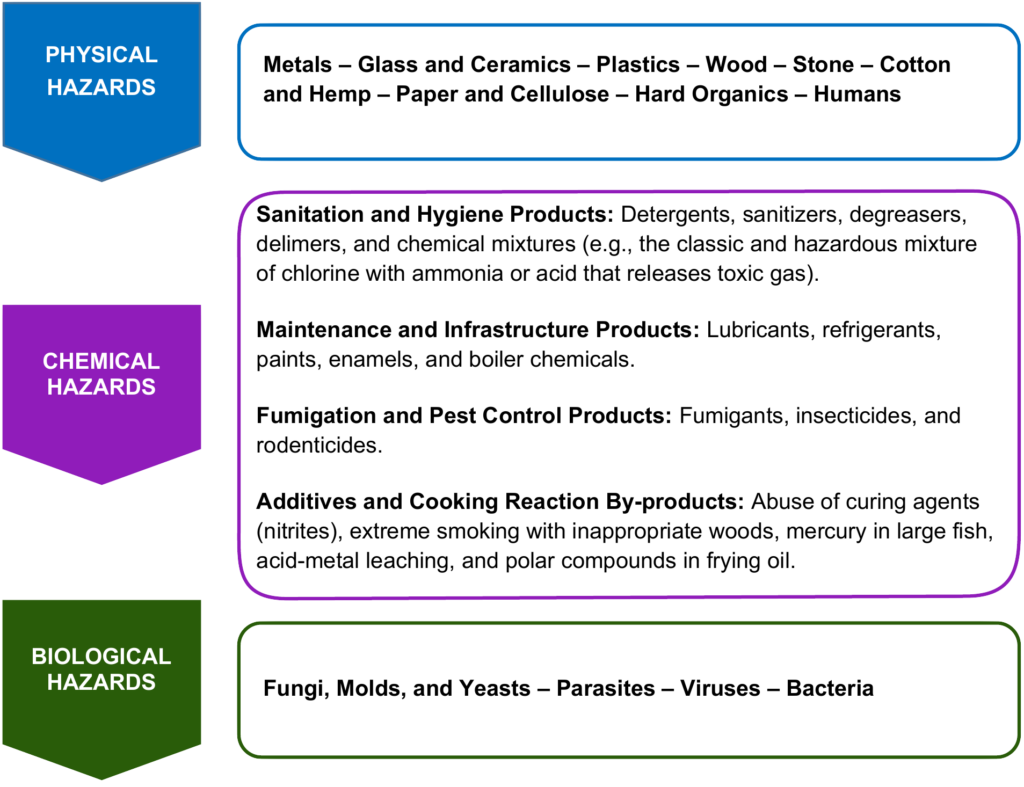
Sanitation and Hygiene Products
Specimen A: Detergents and Rinse Incompatibility (The Rush in the Wash Sinks)
Surfactants designed to suspend grease and soil from tableware that migrate to the dish due to deficient or rushed rinsing during the service «rush».
Vectors in the Kitchen and Bar:
- Residual Liquid or Paste Dish Detergent: Pots, pans, and portioning trays that are washed manually against the clock. If the operator does not perform a thorough rinse with running water, an invisible film of surfactants dries on the surface and dissolves into the next hot preparation (sauces or soups).
- Improperly Drained Bar Glassware: Glasses and cups washed with high-foam detergents in saturated compartment sinks, where the rinse water is already contaminated with soap.
Physiological Effect: Acute irritation of the gastric mucosa, nausea, foamy vomiting, chemical diarrhea, and a persistent soapy taste that ruins the guest experience.
Kitchen Control Practice:
- Mandatory implementation of the three-compartment sink system (Wash, Rinse, and Sanitize) with constant renewal of the rinse water.
- Establish air-drying on inclined sanitary racks; wiping wet tableware with towels that could redistribute chemical residues is strictly prohibited.
Specimen B: Sanitizers and Dosage Errors
Chemical compounds (primarily chlorine or quaternary ammonium) used to sanitize surfaces and vegetables, whose danger lies in the false premise that «higher concentration means greater cleanliness».
Vectors in the Kitchen:
- Unmeasured Vegetable Sanitization: The cold-station operator pours liquid chlorine «by eye» into the lettuce or strawberry wash sink, exceeding the parts per million (20 ppm) allowed by health authorities and omitting the evaporation time or rinsing.
- Saturated Line Towels: Cleaning cloths submerged in hyper-concentrated sanitizer solutions that are wiped over worktables or cutting boards right before placing a protein, transferring the chemical through direct contact.
Physiological Effect: Mild burns on lips, esophageal irritation, chemical poisoning, and destruction of the consumer’s beneficial intestinal flora.
Kitchen Control Practice:
- Mandatory use of calibrated automatic chemical dispensing stations or, failing that, specific measuring cups.
- Mandatory use of chemical test strips to measure ppm (parts per million) during every operational shift to verify that chlorine stays between 50-100 ppm and quaternary ammonium between 200-400 ppm (according to NRAEF standards).
- Critical Parameter Breakdown: 20 ppm for direct food contact; 80 ppm for food-contact surfaces and areas; 200 ppm or higher for non-food contact surfaces or areas of the facility.
Specimen C: Degreasers and Hot Condensation
Highly alkaline and corrosive chemical agents used to remove carbonized grease from exhaust hoods, filters, flat-tops, and salamanders.
Vectors in the Kitchen:
- Drip from Hood Condensation: Spraying degreaser onto exhaust hood filters while the hot line is turned on. Cooking steam condenses the chemical suspended in the air, causing it to drip directly onto the food being cooked on the range or grill.
- Lack of Neutralization on Flat-Tops: Applying caustic degreaser to the flat-top grill at the end of the night and omitting the subsequent wash with a neutralizing agent (such as vinegar or abundant water), leaving an alkaline residue that will integrate into the first food item of the following day.
Physiological Effect: Severe chemical lacerations and burns in the upper digestive tract due to the extremely high (alkaline) pH of the product.
Kitchen Control Practice:
- Strictly prohibit deep cleaning of hoods and exhaust fans during food production hours.
- Require a triple rinse and subsequent verification with clean water on any cooking surface where an industrial degreasing agent has been applied.
Specimen D: Delimers and Closed-Circuit Systems
Strong acids used to dissolve mineral and scale deposits in equipment handling hot water, such as ice machines, automatic commercial dishwashers, and industrial coffee makers.
Vectors in the Kitchen:
- Incomplete Flushing/Purging in Ice Machines: Running the deliming cycle on the ice maker plates and reactivating ordinary production without discarding the first batches of ice, which carry over the toxic remains of the deliming acid.
- Industrial Coffee Maker Lines: Failing to perform the clean water rinse cycles specified by the manufacturer after chemical deliming of the internal boiler
Physiological Effect: Acute abdominal pain, tooth enamel erosion upon consumption, and risk of gastric perforation at high concentrations.
Kitchen Control Practice:
- Label and lock out the equipment with «MAINTENANCE IN PROGRESS – DO NOT USE» signs during deliming cycles.
- Mandatory disposal of the first three consecutive full ice productions following chemical maintenance and verify the pH of the discharge water.
The Critical Operational Scenario: Prohibited Chemical Mixtures
Just as in the volume on mechanical hazards, there is a catastrophic behavioral scenario caused by sanitation staff when attempting to speed up the sanitizing processes:
The Critical Error: Combining Chlorine with Acids or Ammonia
This frequently occurs in the dishwashing/scullery area or during floor mopping when mixing bleach (sodium hypochlorite) with ammoniated degreasers or acidic delimers (or even concentrated vinegar).
The Mechanism: This mixture triggers an immediate chemical reaction that releases toxic chlorine gas (chloramine) into the kitchen air.
Physiological Effect: The gas is highly toxic by inhalation; it causes immediate burns to the eyes and respiratory tract, pulmonary edema, and can cause staff to faint or suffocate in enclosed spaces, while also contaminating all exposed mise en place (exposed food items) through environmental sedimentation.
Control Practice: Rigorous training based on the ServSafe standard regarding the handling of Safety Data Sheets (SDS). Absolute prohibition of storing chemical products in food containers (such as soda bottles or sauce pans) and the mandatory requirement to keep chemicals in their original, properly labeled containers.
Maintenance and Infrastructure Products
Specimen E: Non-Food-Grade Lubricants (The Mechanical Error)
Industrial oils, greases, and penetrating sprays (such as classic WD-40 or lithium grease) incorrectly applied to moving machinery components that come into direct contact with food.
Vectors in the Kitchen:
- Deli Slicers and Mixers: The operator or maintenance technician applies common lubricating oil to the slicer blade shaft or the upper gears of the commercial mixer to eliminate noise. With daily use vibration and friction, the black oil drips directly onto the ham, cheese, or dough.
- Meat Grinder Maintenance: Greasing the internal bolts of the grinder head with automotive grease instead of certified sanitary petrolatum (USP white petrolatum/food-grade grease).
Physiological Effect: Hydrocarbon poisoning, medium-term hepatic (liver) disorders, severe nausea, and persistent chemical contamination of the product.
Kitchen Control Practice:
- Prohibit the entry of common industrial lubricants into food storage and preparation areas.
- Mandate the exclusive use of certified H1 lubricants (Food-Grade), specifically designed for food machinery where there is a risk of incidental food contact.
- Visually inspect equipment shafts before starting daily production to check for drips or dark grease residues.
Specimen F: Refrigerants and Antifreeze (Glycol and Hidden Infrastructure)
Chemical fluids used in closed-circuit mass refrigeration systems, flash chillers (blast chillers), or draft beer lines at the bar.
Vectors in the Kitchen and Bar:
- Invisible Leaks in Walk-in Freezers: Micro-perforations in the ceiling evaporator coils of the walk-in freezer that cause refrigerant or glycol to drip directly onto open boxes of proteins or vegetables stored below.
- Beer Cooling Systems (Glycol Chillers): A failure in the bar system heat exchanger that allows the cooling glycol to seep into the product line, contaminating the beverage traveling to the customer’s tap.
Physiological Effect: Ethylene glycol is highly toxic; it causes acute kidney injury, severe metabolic acidosis, neurological symptoms resembling extreme alcohol intoxication, and is potentially fatal in high doses.
Kitchen Control Practice:
- Implement industrial refrigeration systems that utilize inhibited food-grade propylene glycol (non-toxic) instead of ethylene glycol.
- Schedule monthly preventive inspections of refrigeration lines and pressure gauges to detect pressure drops that betray micro-leaks before they reach the product.
Specimen G: Boiler Additives and Steam Lines (Chemical Carryover)
Anti-corrosive and anti-scaling compounds dosed into industrial boiler water to protect steam piping systems.
Vectors in the Kitchen:
- Direct Injection into Steam-Jacketed Kettles and Tilting Skillets: In high-production kitchens (hotels or industrial commissaries), boiler steam is injected directly to heat or cook food within steam-jacketed kettles. If the boiler is over-dosed with volatile amine chemicals and culinary-grade steam filters are omitted, these compounds travel through the pipeline and contaminate the food via carryover.
Physiological Effect: Systemic toxicity, severe irritation of the digestive mucous membranes, and a high risk of mass chemical poisoning in the dining room.
Kitchen Control Practice:
- Ensure that the additives used in boiler water treatment comply with regulations for steam in contact with food (FDA-approved/food-grade compounds).
- Install and perform rigorous, scheduled maintenance on culinary-grade steam filters on the kitchen line.
Specimen H: Infrastructure Coatings, Paints, and Enamels
Volatile chemical substances and industrial pigments applied to kitchen walls, ceilings, or metallic structures that flake or peel over time.
Vectors in the Kitchen:
- Moisture Flaking and Peeling Over the Line: Using standard epoxy paint or common enamel (unsuited for sanitary areas) on the ceiling directly above the hot line or the wash sink. Under constant steam exposure, the paint blisters, flakes, and falls as chemical chips into the exposed mise en place.
- Painting Storage Shelving: Coating dry storage racks with standard anti-corrosive enamel, whose toxins transfer by direct contact to porous food sacks or flake off onto ingredients.
Physiological Effect: Accidental ingestion of heavy metals or toxic polymeric compounds, gastrointestinal irritation, and long-term toxin accumulation.
Kitchen Control Practice:
- Require the exclusive use of sanitary-grade, anti-fungal, and lead-free paints and coatings certified to withstand high temperatures and moisture without peeling.
- Strictly prohibit painting or infrastructure touch-up work while the kitchen is operational or when food is exposed.
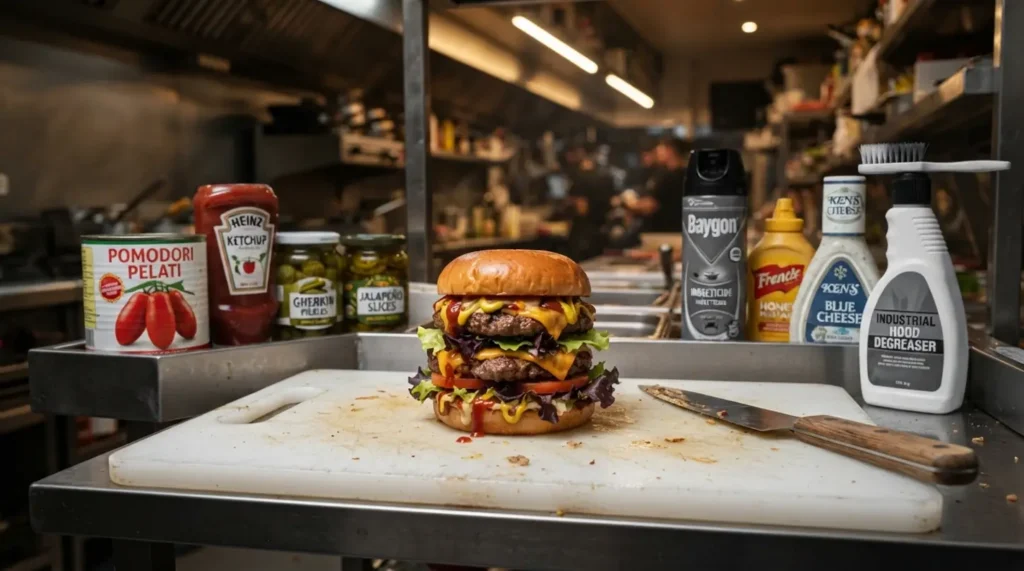
Pest Control and Fumigation Products
Specimen I: Environmental-Action Insecticides and Fumigation Agents
Neurotoxic chemical substances applied as gases, mists, or aerosols to eradicate flying and crawling insects (cockroaches, flies, ants), which contaminate through environmental settling.
Vectors in the Kitchen:
- Unprotected Environmental Fumigation: An external company applies thermal fogging or overnight spraying in the kitchen, and the manager fails to protect or remove the mise en place, tableware, pots, cutting boards, or mobile equipment. The chemical settles as an invisible film over direct food-contact surfaces.
- Using Commercial Aerosols During Service: A critical operator error where, upon spotting flies or cockroaches during service hours, they apply a commercial aerosol insecticide near the plating line or the beverage bar.
Physiological Effect: Acute poisoning by organophosphates or pyrethroids; triggers excessive salivation, abdominal spasms, muscle tremors, respiratory distress, blurred vision, and immediate nausea.
Kitchen Control Practice:
- Strictly prohibit the storage and use of household-grade commercial insecticides inside the restaurant.
- Mandate that all pest control treatments be performed by a certified company outside of operating hours, enforcing the removal of all exposed food and the hermetic bagging of all utensils.
- Post-Fumigation Gold Rule: Perform deep washing and sanitizing of all kitchen surfaces (tables, boards, slicers) before lighting the stoves for the next operational shift.
Specimen J: Rodenticides and Chemical Baits (The Displacement Hazard)
High-potency poisons primarily formulated as anticoagulants (such as bromadiolone or warfarin), designed as blocks, pellets, or pastes to eradicate rats and mice.
Vectors in the Kitchen and Storeroom:
- Placement of Open Baits: Scattering loose rat poison or pellets directly onto the dry storage floor or behind refrigeration units instead of utilizing locked bait stations. Rodents gnaw on the bait, crumble it, and transport the toxic fragments on their paws toward sacks of flour, rice, or sugar.
- Rodent Demise in Storage Areas: The rodent consumes the bait and dies days later on top of a food pallet, chemically contaminating the secondary packaging before being detected.
Physiological Effect: Severe internal bleeding due to vitamin K inhibition, multiple organ failure, and acute systemic toxicity in cases of direct or cross-ingestion.
Kitchen Control Practice:
- Establish an Integrated Pest Management (IPM) program focused on exclusion (sealing cracks, installing grates on drains).
- Exclusive use of rigid plastic bait stations, locked with a key and secured to the wall or floor, placed solely along the exterior perimeter of the restaurant. Inside the kitchen and storeroom, only mechanical snap traps or glue boards (poison-free) are permitted.
- Maintain an updated map indicating the location of every trap and record daily inspections.
Specimen K: Cockroach Gel Baits and Proximity Contamination
Pasty-consistency chemical supplies applied with syringes into cracks, hinges, and electric motors for crawling insect control.
Vectors in the Kitchen:
- Application in Food-Contact Zones: Applying the bait gel directly onto stainless steel table slides, inside edges of worktables, or near electrical outlets where blenders or commercial mixers are plugged in. Under high kitchen heat, the gel can liquefy, drip, or come into direct contact with the cook’s hands during portioning operations.
Physiological Effect: Gastrointestinal discomfort, nausea, and risk of neurotoxic toxin accumulation in cases of repetitive ingestion.
Kitchen Control Practice:
- Apply gel baits strictly within structural blind spots (rear electrical panels, refrigeration motor feet) where any possibility of food or operator hand contact is completely eliminated.
- Supervise application to ensure the area does not become oversaturated with product, preventing thermal dripping or detachment.
Food Additives and Cooking Reaction By-products
Specimen L: Abuse of Nitrites and Nitrates as Curing Agents (Prague Powder)
Chemical food additives indispensable for preservation and pink color development in charcuterie and sausages, whose excess is lethal by design.
Vectors in the Kitchen:
- Artisanal Curing in the Restaurant: The establishment’s cook or charcutier processes their own bacon, pastrami, or hams and incorporates Prague Powder (Sodium Nitrite) «by eye» or using a poorly calibrated scale, exceeding strict parts per million (ppm) public health regulations.
- Ingredient Confusion: Storing Prague Powder (which must be tinted pink as a control practice) in a common kitchen container, causing an operator to mistake it for sea salt or table salt, thereby bypassing safety dosage thresholds in an ordinary dish.
Physiological Effect: Acute toxicity due to methemoglobinemia (chemical blockage of the blood’s capacity to transport oxygen), cyanosis (bluish coloration on lips and fingers), severe headaches, drastic drops in blood pressure, and immediate life-threatening risk to children or vulnerable patrons.
Kitchen Control Practice:
- Absolute prohibition of dosing curing salts without high-precision digital gram scales.
- Mandate that all Prague Powder utilized in the restaurant be artificially tinted an intense pink color to immediately alert the operator.
- Maintain curing salts under strict inventory control within the storeroom, kept in their original, properly labeled containers, and completely isolated from hot line service stations.
Specimen M: Extreme Smoking or Utilization of Inappropriate Woods (Soot Hazard)
Volatile toxic chemical compounds (Polycyclic Aromatic Hydrocarbons – PAHs) deposited on protein surfaces due to deficient combustion.
Vectors in the Kitchen:
- Use of Resinous or Treated Woods: Utilizing remnants of shipping pallets (pallets), construction lumber chemically treated with fungicides, or resinous woods (such as pine) inside the smoker or closed charcoal grill (e.g., Josper style). Resins and chemical treatments evaporate and bind directly to the meat.
- Incomplete Combustion and Prolonged Smoking: Smoking pieces of meat in chambers lacking proper ventilation where oxygen flow is deficient, causing charcoal or wood to generate a massive amount of tar, soot, and benzopyrenes that coat the food item in a bitter black crust.
Physiological Effect: Ingestion of highly carcinogenic and mutagenic compounds over the long term; in the short term, it triggers gastric irritation, extreme heartburn, and chemical acid reflux.
Kitchen Control Practice:
- Exclusively utilize certified, dehydrated culinary hardwood logs (apple, cherry, oak, or hickory) free of resinous bark.
- Perform weekly scheduled maintenance and soot cleaning of exhaust ducts and smoking chambers to prevent the accumulation and subsequent dripping of condensed creosote.
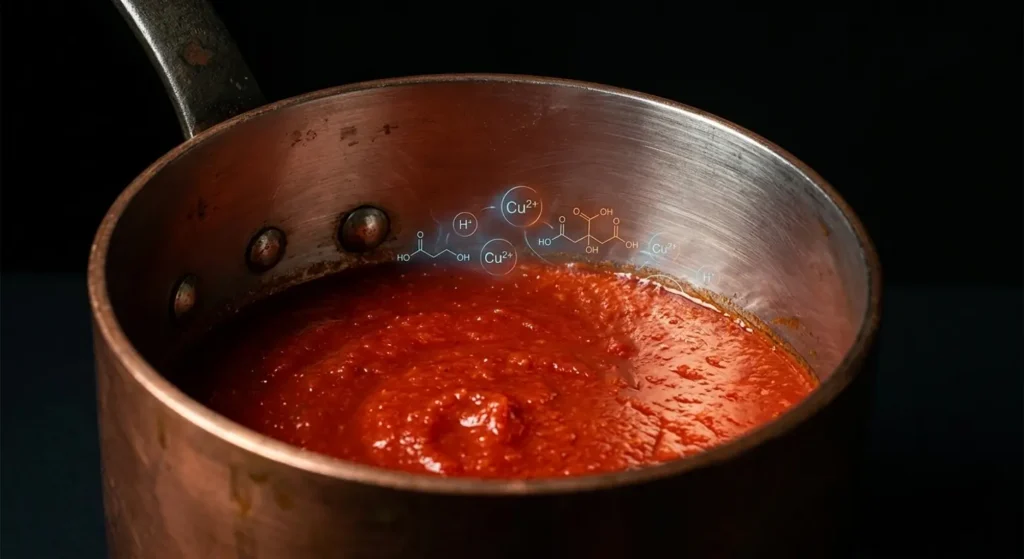
Specimen N: Acid-Metal Leaching of Reactive Metals (Chemical Attack on Tableware)
The dissolution chemical reaction occurring when highly acidic food items come into direct contact with toxic or reactive metals lacking sanitary food-grade coatings.
Vectors in the Kitchen and Bar:
- Storing Sauces in Pewter or Galvanized Containers: Storing or portioning tomato sauce, citrus juices, ceviches, escabeches, or vinegar-based dressings in galvanized iron (zinc) vessels, un-tinplated copper pots, or chipped pewter containers. The food’s acid «dissolves» the metal, integrating it directly into the product.
- Bar Beverage Dispensers: Carbonated beverage or juice lines at the bar where copper piping or lead/cadmium alloys come into direct contact with the acidic fluid due to backflow prevention valve failures within the CO2 gas system.
Physiological Effect: Acute heavy metal poisoning (copper, zinc, or cadmium); triggers a severe metallic taste in the mouth, violent vomiting (frequently blue or green colored if caused by copper), profuse diarrhea, and excruciating abdominal pain in less than an hour.
Kitchen Control Practice:
- Absolute prohibition of storing or cooking highly acidic foods in utensils or containers made of copper, unanodized aluminum, galvanized iron, or damaged pewter.
- Exclusively utilize surgical food-grade stainless steel (304 or 316) containers or certified sanitary plastic containers (such as polycarbonate or polypropylene Cambros) for storing acidic ingredients.
Specimen O: Extreme Total Polar Material Degradation in Frying Operations
Highly cytotoxic chemical substances and oxidative degradation polymers generated within cooking oil when its operational life cycle threshold is exceeded.
Vectors in the Kitchen:
- Oil Abuse in Deep Fryers: Keeping commercial deep fryers turned on at high temperatures (exceeding 350 °F / 180 °C) for hours without product, while omitting the daily filtering of carbonized sediments (breading debris) that accelerate lipid hydrolysis and thermal decomposition. The frying oil turns dark, viscous, and generates total polar materials that saturate the food.
Physiological Effect: Severe irritation of the gastrointestinal tract, nausea due to the ingestion of free radicals and oxidized trans fats, and an elevated epidemiological risk of long-term cardiovascular and oncological diseases.
Kitchen Control Practice:
- Implement a daily oil filtering protocol utilizing sanitary mesh filters or magnesium silicate powder compound treatments.
- Enforce mandatory utilization of digital Total Polar Material (TPM) meters or chemical test strips during every operational shift; oil must be discarded without exception upon reaching 25% Total Polar Materials (TPM), in accordance with international health inspection standards.
Angelo Campione ─ FMP