CONTAMINARIUM – 7/8
CATALOG OF FOOD AGENTS AND HAZARDS — BIOLOGICAL HAZARDS: BACTERIA (PART II - THE BIG FOUR)
In advanced food safety training, there are bacterial pathogens that every health authority and restaurant supervisor must hunt down with zero tolerance. Unlike the silent suspects from the previous volume, these bacterial agents of «The Big Six» possess such an aggressive infectivity and massive outbreak potential that international regulations mandate the immediate exclusion and mandatory epidemiological reporting of any personnel found to be carriers. Their skeletons are hidden in the operational closet of a complete breakdown in personal hygiene protocols and the separation of kitchen workflows.
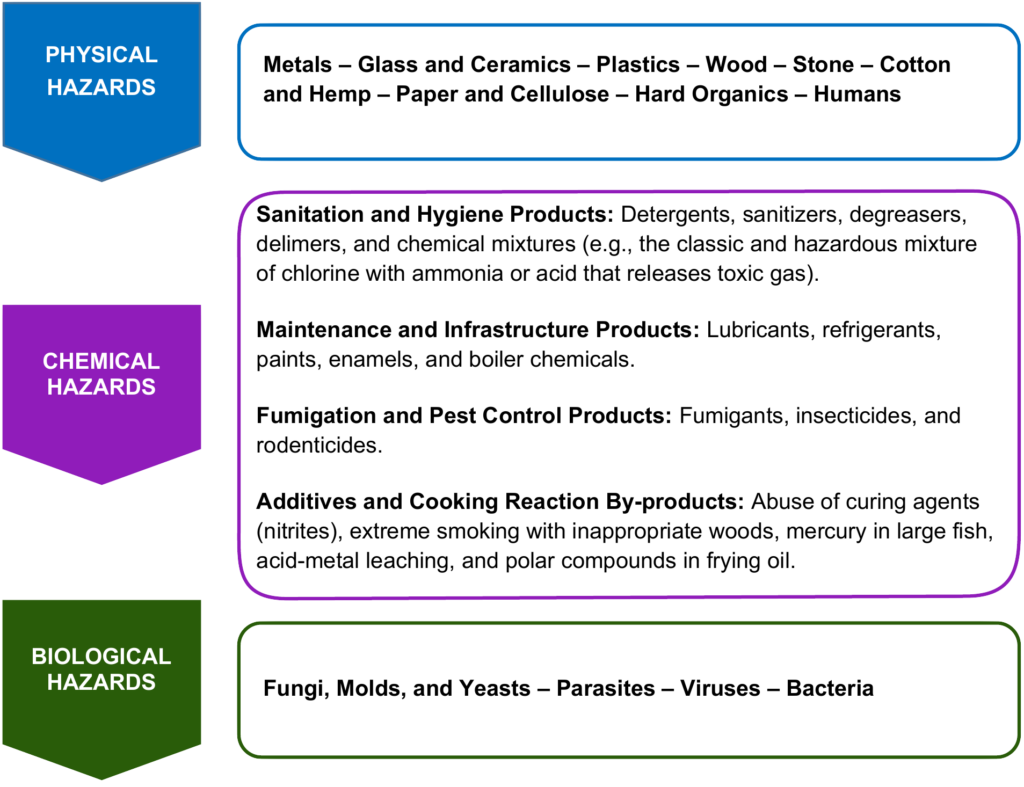
Biological Specimens: The Enemies’ Profiles and Their Vectors
Specimen A: Non-Typhoidal Salmonella (Salmonella spp.)
A gram-negative bacillus of the Enterobacteriaceae family, recognized as one of the leading causes of mass foodborne illness outbreaks associated with proteins of animal origin.
The Enemy’s Profile: It naturally inhabits the intestinal tract of many farm animals, particularly poultry and reptiles. Its major competitive advantage is its ability to survive for weeks in dry environments and low-moisture foods (such as eggshells or chocolate), waiting for ideal temperature conditions to multiply.
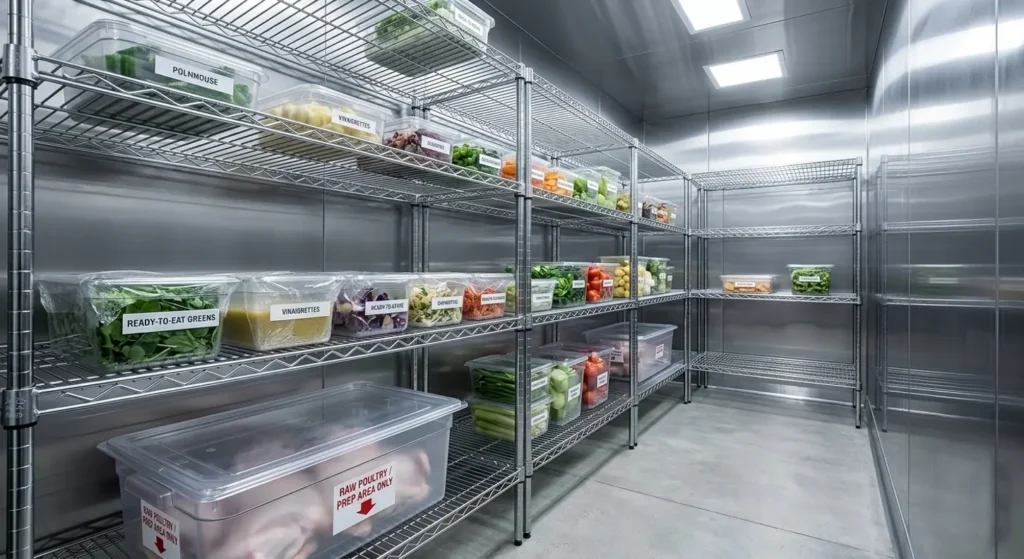
Kitchen Vectors: Portioning raw poultry and abusing unpasteurized eggs. The cook cracks raw eggs to prepare a house-made mayonnaise, a hollandaise sauce, or a tiramisu at the cold station, keeping the dessert or sauce within the Temperature Danger Zone (TDZ: 41°F to 135°F / 5°C to 57°C) of the Codex Alimentarius. It also occurs via cross-contamination when juices from raw chicken drip onto ready-to-eat vegetables inside the walk-in refrigerator.
Physiological Effect: Salmonellosis. It triggers the sudden onset of high fever, acute colicky abdominal pain, severe diarrhea (sometimes bloody), and vomiting within a 6 to 72-hour window. It can evolve into severe dehydration requiring hospitalization, especially in pediatric and elderly patients.
Kitchen Control Practice:
- Cook poultry (chicken, turkey) until it reaches a minimum internal temperature of 165°F (74°C) for 15 seconds (NRAEF Standard).
- Use solely and exclusively liquid pasteurized eggs for culinary preparations that will not undergo a subsequent cooking process (dressings, mayonnaises, desserts).
- Store raw proteins in the walk-in refrigerator following strict top-down storage hierarchy (raw poultry always on the absolute bottom shelf).
Specimen B: Salmonella Typhi (The Typhoid Fever Skeleton)
A highly virulent strain of Salmonella whose sole host and reservoir is the human body, transmitted strictly via the fecal-oral route by carrier operators.
The Enemy’s Profile: Unlike the non-typhoidal strain, Salmonella Typhi does not come from animals; it comes from people. An operator who contracts the bacteria can become an asymptomatic carrier, shedding millions of bacteria through their hands for months without knowing they are sick. A miniscule infectious dose is enough to trigger a devastating outbreak.
Kitchen Vectors: Handling Ready-to-Eat (RTE) foods by carriers. The operator at the bakery station or buffet service fails to perform mandatory handwashing with nail brushing after using the restroom. Slicing bread, assembling sandwiches, or portioning fresh fruits bare-handed transfers the bacteria directly onto the customer’s plate.
Physiological Effect: Typhoid Fever. A severe systemic infection. It causes prolonged and sustained high fever (up to 104°F / 40°C), extreme weakness, severe headache, skin rashes (rose spots), abdominal pain, and splenomegaly. If left untreated with specific antibiotics in time, it can cause intestinal perforation and death.
Kitchen Control Practice:
- Definitive Exclusion and Reporting: Any employee diagnosed with Salmonella Typhi must be immediately excluded from the restaurant premises. They cannot return to work in food-handling areas until they provide an official medical clearance and negative laboratory stool cultures.
- Absolute prohibition of bare-hand contact with ready-to-eat foods; mandate the use of service utensils or nitrile gloves.
Specimen C: Shigella spp. (The Fly and Broken-Hygiene Bacterium)
A highly infectious gram-negative bacillus that colonizes the human intestine, directly associated with deficient sanitary conditions and zero control of mechanical vectors (pests).
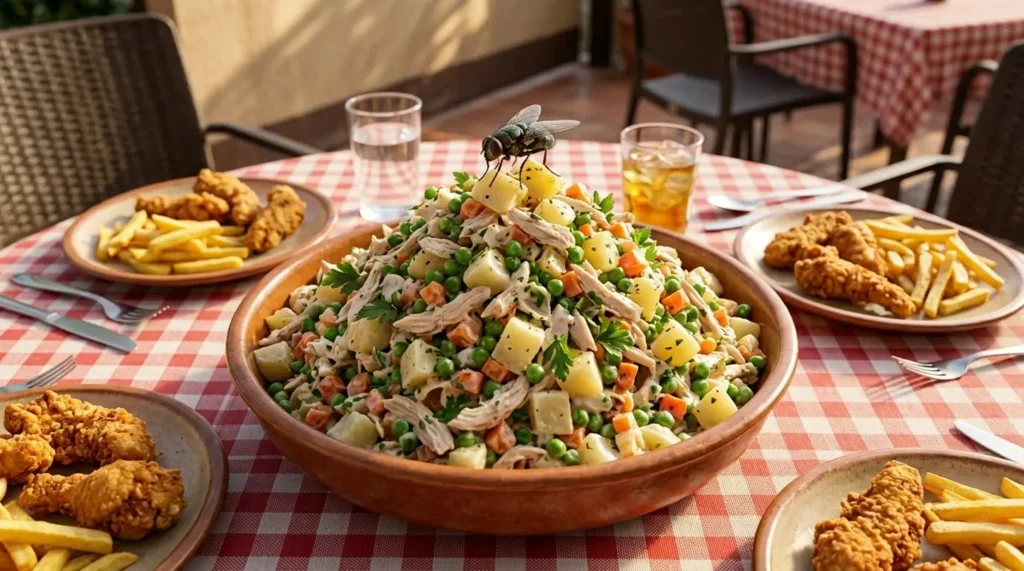
The Enemy’s Profile: Shigella thrives in careless kitchens. Fewer than 100 bacteria are enough to sicken a healthy adult. Its spread is extremely rapid because it uses common houseflies as mechanical bridges, transporting the bacteria on their feet from trash cans or drains directly onto exposed food items.
Kitchen Vectors: Composed salads requiring intense manual handling. Preparing potato, tuna, or macaroni salads where the operator mixes ingredients bare-handed. It also occurs when the restaurant lacks fly screens or air curtains at service doors, allowing flies to land on mise en place ready for expediting.
Physiological Effect: Bacillary Dysentery (Shigellosis). It destroys cells lining the intestinal wall by releasing the Shiga toxin. It causes violent, bloody diarrhea containing mucus, fever, excruciating abdominal cramps, and tenesmus (the painful and constant sensation of needing to evacuate).
Kitchen Control Practice:
- Immediately exclude any operator diagnosed with Shigella or displaying symptoms of diarrhea.
- Maintain rigorous Integrated Pest Management (IPM): install UV light fly traps in transit zones (never directly over the plating line) and keep trash cans hermetically closed.
- Deeply wash and sanitize fruits and vegetables that grow close to the ground using certified sanitizers.
Specimen D: Enterohemorrhagic Escherichia coli (e.g., E. coli O157:H7)
A mutagenic, Shiga toxin-producing strain (STEC) that inhabits the intestines of cattle and contaminates meat surfaces during the slaughtering process.
The Enemy’s Profile: The critical danger of this skeleton occurs during meat grinding. In a whole primal cut (like a New York strip or a ribeye), the bacteria is strictly on the exterior and dies upon searing on the grill. But when meat is passed through a grinder to make ground beef (burgers), the surface bacteria becomes homogeneously distributed throughout the entire core of the meat mass. If the burger is served medium-rare, the bacteria at the center survives alive.
Kitchen Vectors: Undercooked burgers and cross-contamination from meat juices. The grill cook prepares gourmet burgers to a juicy medium-rare pink center, leaving the thermal core below safe thresholds. It also occurs by irrigating lettuce or sprouts with water contaminated with cattle manure.
Physiological Effect: Severe E. coli Gastroenteritis. It triggers severe stomach cramps and intense bloody diarrhea. In severe cases (especially in children under 5), the toxin travels through the bloodstream, unleashing Hemolytic Uremic Syndrome (HUS), which destroys red blood cells, causes permanent acute kidney failure, and requires lifelong dialysis or results in death.
Kitchen Control Practice:
- ServSafe Golden Rule: Cook ground beef (burgers, meatballs) until it reaches a minimum internal temperature of 155°F (68°C) for 15 seconds. Ground beef is never served medium-rare in a regulated foodservice establishment.
- Avoid cross-contamination: sanitize the meat grinder after each use and use separate utensils to place raw meat on the grill and to remove it once cooked.
Food Safety Manager’s Summary Note
In the kingdom of the «Big Four,» the skeletons hidden in the operational closet admit no middle ground or empirical assumptions. These bacteria represent the ultimate test of hospitality management. A mediocre handwashing or a burger served pink just to please a patron’s aesthetic whim can cost a child’s life due to kidney failure or permanently close the restaurant under court order. The Food Manager Professional demonstrates that food safety with the Big Four is won with a digital probe thermometer in hand and an unyielding policy of mechanical handwashing.
Angelo Campione – FMP