CONTAMINARIUM – 6/8
CATALOG OF FOOD AGENTS AND HAZARDS — BIOLOGICAL HAZARDS: BACTERIA (PART I)
Unlike viruses, bacteria in a restaurant are independent, living organisms: they breathe, metabolize, and multiply at a geometric rate if provided with nutrients, moisture, and time within the Temperature Danger Zone (TDZ). In this first installment dedicated to the bacterial universe, we step away from the most media-prominent suspects to hunt down the skeletons hidden in the operational closet that act through preformed toxins, indestructible spores, or those that challenge the barriers of cold and acids in daily operations.
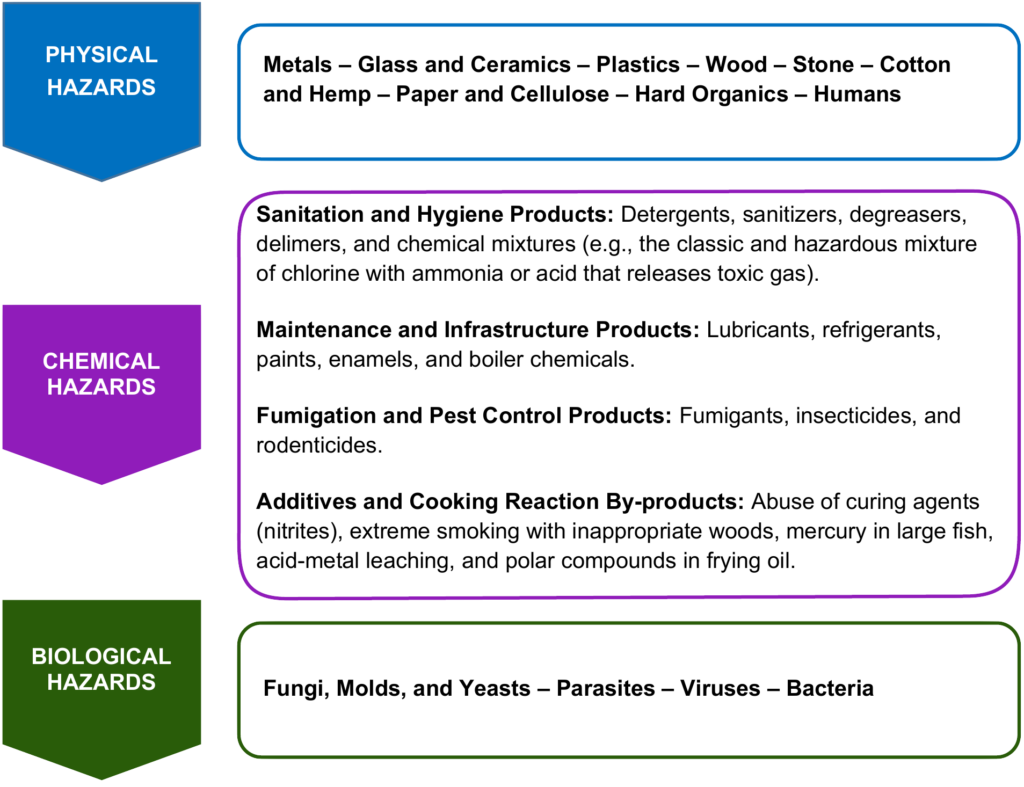
Biological Specimens: The Enemies’ Profiles and Their Vectors
Specimen A: Staphylococcus aureus (The Operator’s Hands Toxin)
A gram-positive bacterium capable of producing heat-stable enterotoxins that cause sudden, explosive foodborne intoxication. The critical danger lies in the fact that even if cooking destroys the vegetative bacteria, the toxin itself resists boiling temperatures.
The Enemy’s Profile: Its natural habitat is the human body: it hides in the nose, skin, hair, and specifically within infected wounds or pus-filled pimples. It enters food courtesy of staff touching their faces or handling food items bare-handed.
Kitchen Vectors: Portioning complex salads and sandwiches (Cold Mise en Place). The cook has a scratch or an uncovered pimple on their hand. They prepare a chicken salad with mayonnaise or portion cold cuts for a large banquet event. If the food spends time within the TDZ (41°F to 135°F / 5°C to 57°C), the bacteria incubates and excretes the toxin into the food prior to service. (Toxi-infection)
Physiological Effect: Sudden Staphylococcal Food Poisoning. It triggers violent nausea, acute abdominal cramps, and severe vomiting within a record 1 to 6 hours post-ingestion, accompanied by diarrhea and sudden physical prostration.
Kitchen Control Practice:
- ServSafe Standard: Absolute prohibition of handling ready-to-eat foods with exposed wounds on hands. Wounds must be sanitized, covered with a blue waterproof bandage, and mandatorily sealed with a nitrile glove.
- Keep cold preparations strictly below 41°F (5°C) to block toxin synthesis.
Specimen B: Bacillus cereus (The Terror of Fried Rice, Tubers and Pastas)
A spore-forming bacterium omnipresent in soil, notorious for causing two distinct types of syndromes (emetic and diarrheal) through differentiated toxins.
The Enemy’s Profile: When environmental conditions become hostile (such as the heat of initial boiling), this bacterium transforms into a latent spore with an indestructible thermal shield. If the cooked food cools slowly, the spore «wakes up,» reverts to its vegetative state, and colonizes the carbohydrate.
Kitchen Vectors: Deficient cooling of rice, potatoes and pastas. In high-volume or Asian kitchens, large quantities of white rice are boiled for the next day’s «fried rice.» The cook leaves the massive pot cooling at room temperature on the floor or worktable overnight. The core of the rice mass remains warm, deep within the TDZ, allowing massive multiplication and the release of the emetic toxin.
Physiological Effect: Emetic Syndrome (severe vomiting 1 to 5 hours post-consumption) or Diarrheal Syndrome (watery diarrhea and cramps 8 to 16 hours later), depending on whether the toxin was preformed in the rice or incubated in the human gut.
Kitchen Control Practice:
- Two-stage cooling (Codex/NRAEF): Never cool large masses of carbohydrates in deep pots. Ingredients must be portioned into shallow pans (2-inch height Gastronorm pans) and placed into a blast chiller or an ice bath to drop from 135°F to 41°F rapidly (2 hours or less).
Specimen C: Clostridium botulinum (The Anaerobic Neurotoxic Toxin)
A spore-forming, strict anaerobic bacillus (grows solely in the absolute absence of oxygen) that produces the most lethal biological toxin known to science.
The Enemy’s Profile: Its spores naturally reside in soil and water. Vacuum-packaging foods, submerging them in oil, or artisanal canning without proper acid or heat controls creates the perfect anaerobic environment for the spore to germinate and release its neurotoxin.
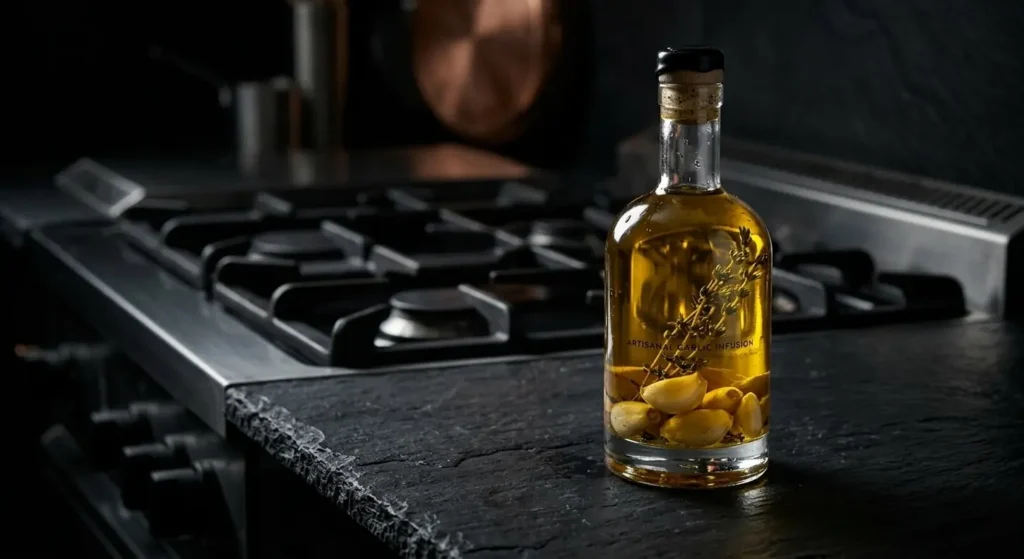
Kitchen Vectors: House-made infused garlic oils and empirical vacuum packaging. The chef prepares an olive oil infused with crushed fresh garlic for the pasta station and leaves it at room temperature next to the stove. The garlic (grown in soil) provides the spore; the oil seals out oxygen; the stove’s heat triggers incubation.
Physiological Effect: Foodborne Botulism. The neurotoxin blocks the nervous system. It causes double vision, difficulty swallowing and speaking, and progressive muscle weakness that evolves into fatal flaccid paralysis due to respiratory failure.
Kitchen Control Practice:
- All oils infused with fresh vegetables or garlic must be kept under strict refrigeration below 41°F (5°C) and mandatorily discarded within 48 hours of preparation.
- Prohibit the use of home-canned items or swollen, dented, or rusted commercial cans in the restaurant.
Specimen D: Listeria monocytogenes (The Psychrotrophic Cold-Loving Bacterium)
A non-spore-forming environmental bacterium possessing the unusual capacity to actively multiply at commercial refrigeration temperatures and resist damp, saline environments.
The Enemy’s Profile: This is the most elusive skeleton within refrigeration walk-ins. It breeds biofilms on stainless steel, on rubber refrigerator door gaskets, and within kitchen drains, jumping onto ready-to-eat foods via cross-contamination.
Kitchen Vectors: The deli station, aged cheeses, and cold salads. Handling blocks of ham, turkey, or cheeses on a deli slicer that has not been properly disassembled and sanitized. Listeria transfers from the machine to the slices, and if the product is stored in refrigeration for days, the bacterial population grows silently.
Physiological Effect: Listeriosis. In healthy adults, it causes flu-like symptoms or mild gastroenteritis. However, in pregnant women, it triggers premature labor, spontaneous abortions, or stillbirth; in the elderly and immunocompromised, it causes meningitis and septicemia, carrying a mortality rate close to 20%.
Kitchen Control Practice:
- Disassemble, wash, and sanitize deli slicers and cold-station utensils as well as meat grinder every 4 hours of continuous use.
- Use secondary shelf-life labeling (Date Marking) on all opened deli meats or RTE food packages; strictly discard upon reaching 7 days in refrigeration at 41°F (5°C).
Specimen E: Campylobacter jejuni (The Poultry Juices Hazard)
A microaerophilic bacterium (requires low oxygen levels) recognized as one of the leading causes of bacterial gastroenteritis worldwide, directly associated with poultry.
The Enemy’s Profile: It colonizes the intestinal tract of healthy chickens and turkeys. The operational skeleton activates when raw poultry juices come into direct contact with surfaces, cloths, or foods that will not undergo a subsequent cooking process.
Kitchen Vectors: Cross-contamination on the cutting board and washing raw chicken. The critical error of washing raw chicken under the prep sink faucet; water splashing spreads the bacteria within a one-meter radius, contaminating clean tables and utensils. It also occurs when slicing raw chicken breasts and then using the same unwashed board or knife to slice tomatoes for a salad.
Physiological Effect: Campylobacteriosis. It causes intense diarrhea (frequently bloody), high fever, severe colicky abdominal pain, and nausea. Long-term, it can trigger Guillain-Barré Syndrome, an autoimmune disorder causing peripheral paralysis.
Kitchen Control Practice:
- Absolute prohibition of washing raw chicken within the restaurant facilities. An area dedicated solely to prep the raw protein before taking it to the kitchen is required.
- Strict use of color-coded cutting boards (Yellow exclusively for raw poultry, Green for fruits and vegetables).
- Cook chicken until it reaches a minimum internal temperature of 165°F (74°C) for 15 seconds.
Specimen F: Clostridium perfringens (The Banquet and Mass Buffet Bacterium)
A spore-forming anaerobic bacillus that multiplies ultra-rapidly in cooked meat dishes kept under deficient temperature controls.
The Enemy’s Profile: Its spores survive the initial cooking of large primal cuts or stews. When the food item enters a slow cooling phase or is kept warm on a buffet line within the TDZ, the bacteria multiplies, doubling its population every 10 minutes in the center of the preparation where oxygen is scarce.
Kitchen Vectors: Large kettles of meat sauce or stews kept warm. Preparing a massive volume of Bolognese sauce or beef stew for a banquet. The kitchen turns off the ranges and leaves the kettle sitting for hours on the line, or places it in a chafing dish with spent sterno heaters that keep the food warm (around 104°F / 40°C), right at the peak of massive incubation.
Physiological Effect: C. perfringens Gastroenteritis. Upon ingesting millions of live bacteria, they form spores in the intestine, releasing an enterotoxin that causes severe abdominal cramps, gas, and intense explosive watery diarrhea within an 8 to 22-hour window.
Kitchen Control Practice:
- Keep hot foods on the buffet service strictly above 135°F (57°C).
- Portion massive stews into small, shallow containers to accelerate cooling and ensure they cross the TDZ within the time frames regulated by Codex.
Specimen G: Helicobacter pylori (The Water Skeleton and Chronic Infection)
A gram-negative spiral bacterium adapted to survive in the most acidic environments of the human body, primarily transmitted through hygiene deficiencies in service or wash water.
The Enemy’s Profile: Although it does not cause acute, few-hour poisoning like staphylococcus, it is a critical occupational and service pathogen. It lodges in the mucous layer of the stomach, weakening it through the production of the urease enzyme to neutralize gastric acid. Its presence in the kitchen betrays a severe breakdown in water potability or operators who fail to wash their hands after using the restroom.
Kitchen Vectors: Serving unfiltered pitcher water or ice manufactured with contaminated tap water; washing ready-to-eat vegetables with non-potable water, or handling clean tableware by an operator with zero hygienic habits. Consuming food from street-side fast-food stalls that lack a continuous supply of potable water.
Physiological Effect: Chronic gastritis, development of peptic ulcers (duodenal and gastric), and is classified by the WHO as a Class I carcinogen, being directly linked to the development of gastric adenocarcinoma (stomach cancer) over the long term.
Kitchen Control Practice:
- Guarantee the maintenance and quarterly replacement of activated carbon filters and UV light systems in the restaurant’s water lines and ice machines.
- Monitor tap water chlorination levels and mandate handwashing with mandatory nail scrubbing for all staff.
Food Safety Manager’s Summary Note
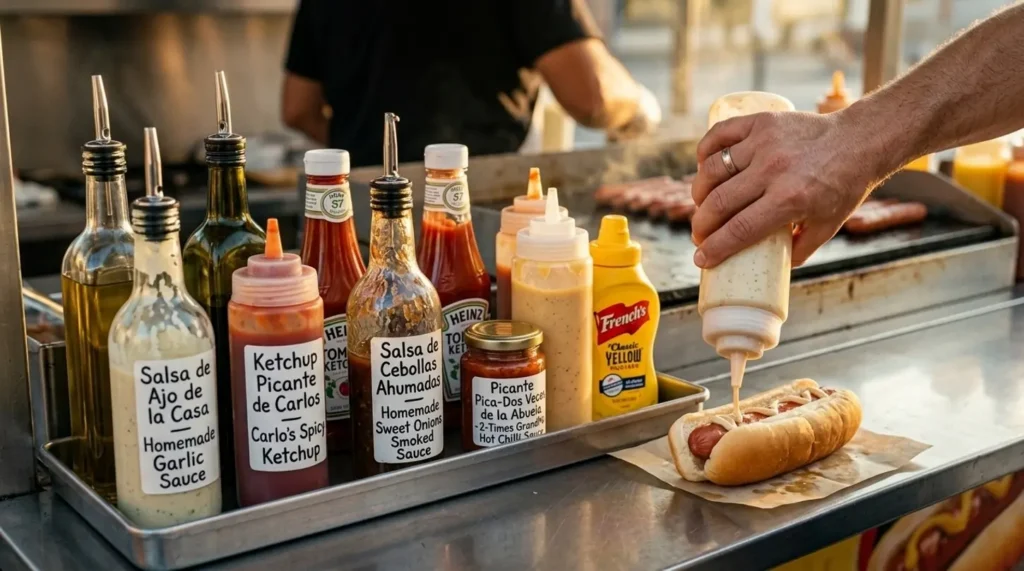
In this first line of the bacterial front, the skeletons hidden in the operational closet teach us that heat does not fix everything. Aggressive cooking will destroy Campylobacter, but it will be useless against the stable enterotoxins of S. aureus or the spores of B. cereus and C. botulinum incubated through negligent cooling. The Food Manager Professional demonstrates that bacterial food safety is won by controlling the thermodynamics of rapid cooling and blocking cross-contamination from the human factor. A timely piece of advice for diners: refrain from consuming sauces, infused oils, or artisanal or «house-made» hot sauces at unapproved establishments, or whenever you have doubts about their hygiene or freshness.
Angelo Campione – FMP