CONTAMINARIUM – 5/8
CATALOG OF FOOD AGENTS AND HAZARDS — BIOLOGICAL HAZARDS: VIRUSES
Unlike bacteria and fungi, viruses in a restaurant kitchen are strictly immobile and parasitic biological agents: they do not breathe, they do not multiply in food, they do not alter the smell or taste of the dishes, and they easily survive ordinary freezing. Food is simply an inert vehicle that the virus utilizes to travel from the hands of an infected operator to the customer’s digestive tract. The skeletons of viruses are hidden in the operational closet of the most ignored symptom in the hospitality industry: the cook who arrives at work with a «mild stomach bug» or a «cold,» whose poor personal hygiene triggers a massive foodborne outbreak within hours.
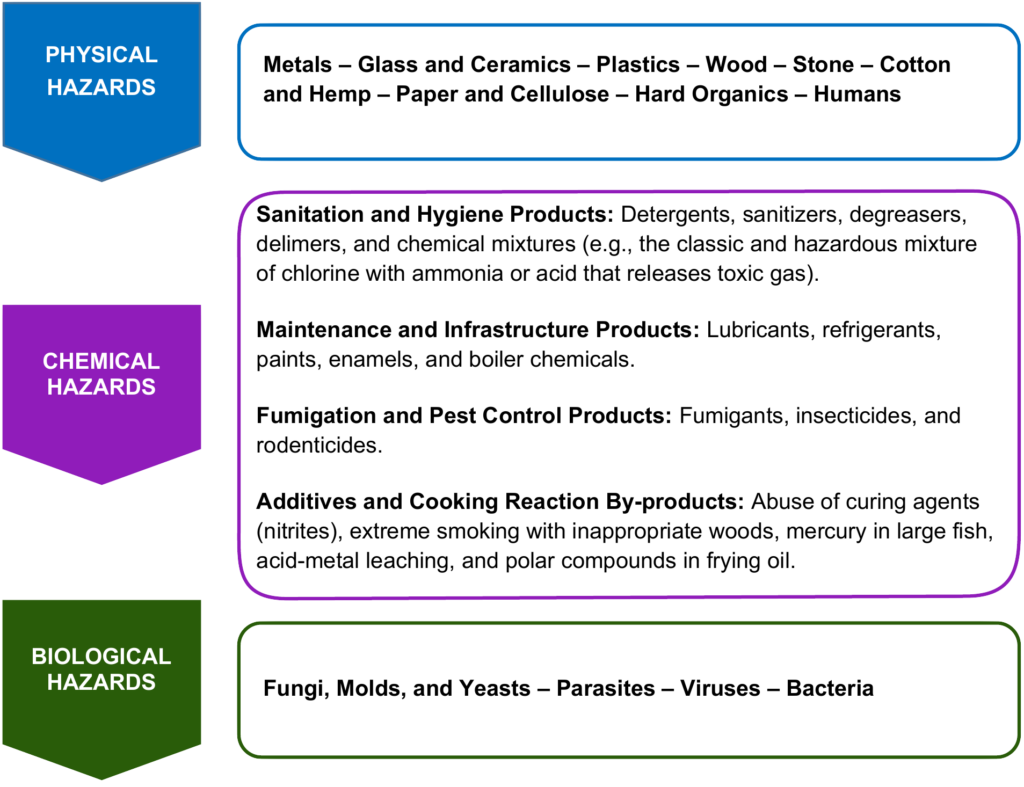
Biological Specimens: The Enemies’ Profiles and Their Vectors
Specimen A: Norovirus (The Cruise Ship and Banquet Virus)
A highly contagious viral agent, internationally recognized as the number one cause of foodborne illnesses (FBIs) in high-density service environments.
The Enemy’s Profile: This virus has a ridiculously low infectious dose: fewer than 20 microscopic viral particles are enough to severely sicken a customer. Its structure is extremely stable on inert surfaces, surviving for days on door handles, light switches, physical restaurant menus, and bathroom faucets. Its transmission route is strictly fecal-oral.
Kitchen Vectors: The cold plating line and daily portioning. The operator in charge of assembling salads or placing final garnishes at the pass arrives at work after suffering a mild episode of diarrhea the previous night. After using the restaurant restroom and performing a superficial handwashing without mechanically scrubbing the nails, they transfer millions of Norovirus particles onto lettuce leaves, burger buns, or ready-to-eat desserts.
Physiological Effect: Acute Viral Gastroenteritis. It causes the sudden and violent onset of intense projectile vomiting, profuse watery diarrhea, severe stomach cramps, and rapid dehydration within a 12 to 48-hour post-ingestion window.
Kitchen Control Practice:
- Strict Exclusion: Any employee displaying symptoms of vomiting or diarrhea must be immediately excluded from the operation and cannot return to the kitchen until 48 hours after symptoms have completely subsided (NRAEF / ServSafe Standard).
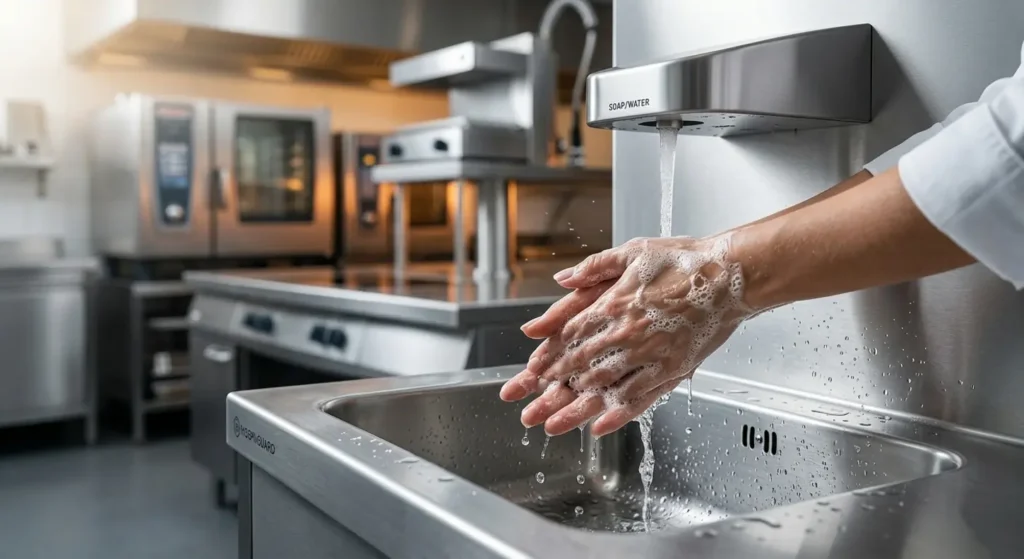
- Mandatory 20-second handwashing with antiseptic liquid soap and vigorous mechanical scrubbing under hot running water (minimum 100°F / 38°C). The exclusive use of hand sanitizer does not eliminate Norovirus from the skin.
Specimen B: Hepatitis A Virus (The Silent Enemy of Prolonged Incubation)
A viral agent that directly attacks liver cells, whose operational danger lies in its prolonged, asymptomatic incubation period.
The Enemy’s Profile: An operator infected with Hepatitis A can be shedding the virus through their feces and hands weeks before displaying the first visible symptom (such as yellow eyes). It resists moderate heat temperatures; therefore, superficial cooking or a deficient steam table on a buffet line does not guarantee its destruction.
Kitchen Vectors: Ready-to-eat foods and shellfish of doubtful origin. The pastry chef or baker decorates cakes or handles ice without gloves. It also occurs through the acquisition of bivalve mollusks (mussels, clams, oysters) illegally harvested from coastal waters contaminated with urban sewage; the the shellfish filters the virus, and the cook serves them steamed in a cooking process that fails to reach the minimum safe internal temperature.
Physiological Effect: Infectious Hepatitis A. It triggers extreme fatigue, fever, abdominal pain in the upper right quadrant, persistent nausea, and characteristically, jaundice (yellowing of the skin and eyes) alongside dark urine. Liver damage can last from weeks to months, forcing the customer’s prolonged medical leave.

Kitchen Control Practice:
- Purchase shellfish solely and exclusively from authorized suppliers certifying that harvest waters are completely free of fecal contamination.
- Completely avoid direct bare-hand contact with Ready-to-Eat (RTE) foods; mandate the use of tongs, deli paper, or single-use nitrile gloves.
Food Safety Manager’s Summary Note
In the virus kingdom, the skeletons are hidden in the operational closet of behavioral failures, and they are not destroyed in the deep fryer or the freezer. The only real barrier of containment in a restaurant is the behavior and health of the human factor. Hand sanitizer gel is a managerial self-deception if it is not preceded by mechanical washing with hot water and soap that physically removes viruses from the skin. The Food Manager Professional teaches that a cook with diarrhea on the hot line is not a responsible employee; they are an active biological threat to the financial viability of the business. The most valuable advice for diners: do not consume raw oysters or ceviche sold «beachside» by unapproved vendors, and avoid sharing snack platters and serving bowls with others.
Angelo Campione – FMP