CONTAMINARIUM – 1/8
CATALOG OF FOOD AGENTS AND HAZARDS — INTRODUCTION AND PHYSICAL HAZARDS OF MECHANICAL ORIGIN
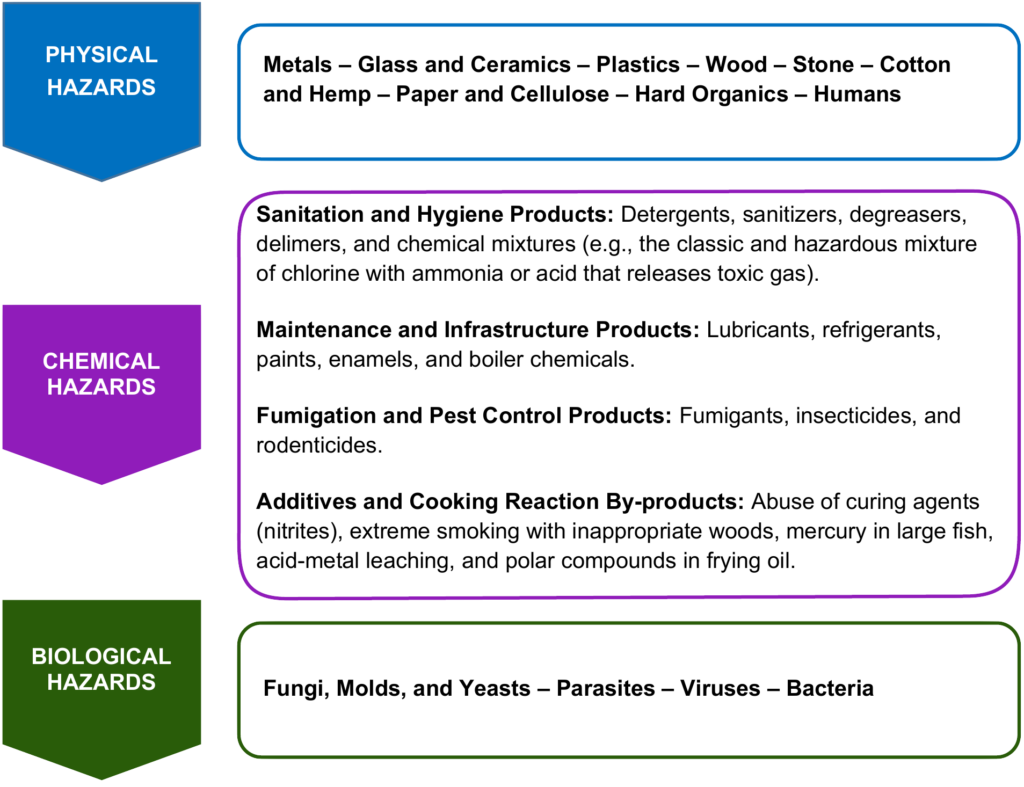
Food safety in modern restaurant operations is not a static reaction, but a discipline of systematic and proactive vigilance. To guarantee food safety in every service, supervisors and operators must learn to identify which skeletons are hidden in the operational closet through a clear taxonomy of hazards. This approach classifies threats according to their intrinsic nature into: physical hazards (mechanical agents); elements that act by immediate physical trauma via foreign objects; chemical hazards, threats derived from the incorrect handling of operational, cleaning, or maintenance substances; and biological hazards, risks spanning the complex universe of biological toxins and microorganisms capable of multiplying silently. The following mental map displays the ecosystem of these risks, serving as the exploration guide for this Contaminarium:
The Physical Hazard in the Restaurant: The Enemy on the Service Line
In a restaurant kitchen, a physical hazard is not a failure of industrial machinery; it is the direct result of rushed or careless handling. It is defined as any foreign object that falls into a dish or drink and physically injures the patron. In the hospitality sector, this hazard destroys a business’s reputation in seconds. A customer who finds a fragment of glass or metal not only returns the dish but generates an immediate crisis in the dining room and on social media—and that is merely the mildest of potential consequences.
Physical Hazard Specimens in Food and Beverage Operations
Specimen A: Metals (Danger in Expediting and Storage)
Metal is one of the most dangerous physical contaminants due to its hardness, density, and ability to generate sharp or cutting edges during the rushed opening of supplies by cooks working against the clock.
Kitchen Vectors:
- Table-mounted / Manual Can Openers: When opening large cans of tomatoes, sauces, or fruits in syrup, blade wear generates micro-shavings that fall directly into the product.
- Packaging Staples: Metallic staples that seal protein cardboard boxes or hydroponic vegetable bags. When pulled forcefully, they snap and fly toward the workstation.
- Aluminum Foil: Used for covering trays or pans in the oven, or for wrapping and protecting the color of rib bones (frenching protection).
- Wire Sponges (Green/Silver Scouring Pads): Fragments that break off when washing pots and get trapped on the rims. When cooking the next sauce, the metal detaches.
Physiological Effect: Mechanical lacerations in the oral cavity, esophageal perforation, internal bleeding in the gastrointestinal tract, and asphyxiation due to upper airway obstruction.
Kitchen Control Practice:
- Prohibit wire sponges in the production area (use high-resistance nylon fibers).
- Inspect and replace the table-mounted can opener blade monthly.
- When opening boxes with staples, remove them completely with a staple extractor before emptying the contents.
- Cut uniform pieces of aluminum foil. Count the pieces and inspect their edges upon removal.
Specimen B: Glass and Ceramics (The Terror of the Bar and Drink Station)
Glass is the most critical hazard in the food and beverage (F&B) service area because it is virtually undetectable inside ice or liquids. Due to its transparency, glass is an extremely difficult enemy to detect once it enters a fluid or a food of pasty or solid consistency.
Kitchen and Bar Vectors:
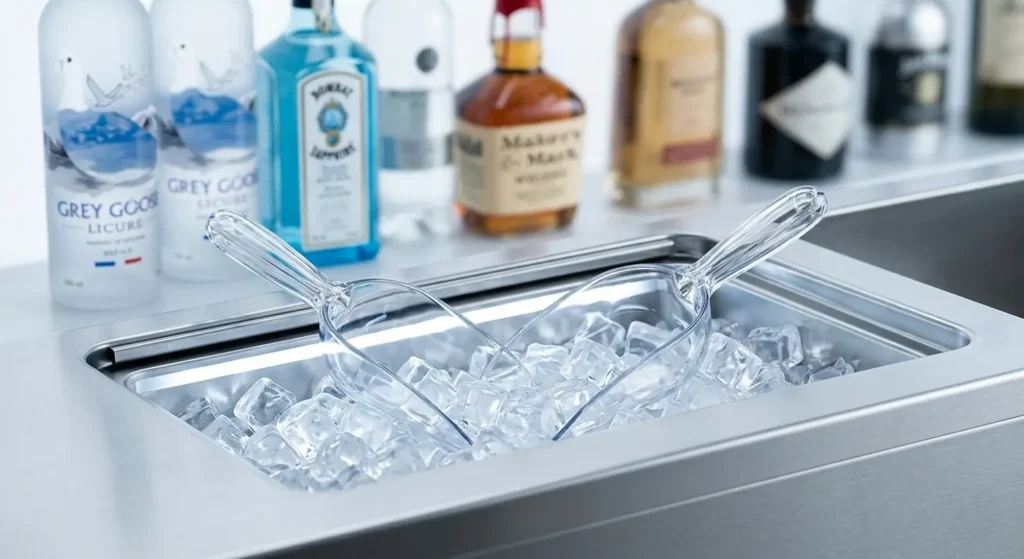
- Using Glasses as Ice Scoops: The most common bartender error. Dipping a glass directly into the ice machine or ice bin causes thermal shock and mechanical pressure to chip the base of the glass. Fragments then mix with the ice.
- Bottle Impact: Striking the necks of syrup, liquor, or sauce bottles against metallic pourers, or storing them too tightly in the bar’s speed rail.
- Chipped Tableware: Plates or cups with chipped edges that remain in service «to avoid losing chinaware».
- Overhead Lighting: Accidental breakage of light bulbs or fluorescent tubes in processing areas that lack polycarbonate protective shields.
Physiological Effect: Massive hemorrhaging in the patron’s mouth and esophagus.
Kitchen Control Practice:
- Absolute prohibition of placing glass in contact with ice. Use only metal, rigid plastic, or polycarbonate scoops.
- If a glass breaks near the ice station, execute the emergency protocol: completely empty the ice bin, melt it with hot water, and sanitize the bin.
- Remove any plate, glass, or cup displaying the slightest fissure or chip from service.
- Use light fixtures with shatterproof protective sleeves and establish a “Glass Breakage Protocol” that requires discarding all products within a 10-foot radius if a container breaks on the line.
Specimen C: Plastics (The Rush of PREP or «Mise en Place»)
Flexible and rigid plastics abound in kitchens due to daily storage and portioning. Their lightweight nature allows them to float, blend in, and go unnoticed with great ease.
Kitchen Vectors:
- Opening Seals: Bands, security rings, and high-density polyethylene strips resulting from defective tearing when opening PET bottles, oil drums, or gallons of liquid ingredients.
- Cutting Sauce / Dressing Bags: Cutting the tips of industrial mayonnaise, ketchup, or mustard bags with dull scissors or knives. This creates a small, detached plastic thread that falls into the container.
- Plastic Film (Cling Wrap): Improperly torn pieces when uncovering Cambro or Gastronorm pans on the hot line; the plastic stretches, tears poorly, and falls into hot food, partially melting.
- Styrofoam (Expanded Polystyrene): Small beads that break off when scraping or removing broccoli, strawberries, or meats from the styrofoam crates provided by suppliers.
Physiological Effect: Mechanical obstruction of the glottis (choking), mechanical asphyxiation in children, and risk of tissue damage if rigid plastic presents sharp edges after breaking.
Kitchen Control Practice:
- Use cutters with sharp blades reserved exclusively for food, making clean single-stroke cuts.
- Never use serrated knives to cut plastic film from containers.
- Transfer food items from the supplier’s styrofoam boxes into sanitary plastic food pans (Cambros) before they enter the kitchen or production line.
Specimen D: Wood (The Danger of Modern Plating)
The trend toward rustic presentations in restaurants has multiplied the presence of this specimen.
Kitchen Vectors:
- Toothpicks and Skewers: Sticks used to hold tall burgers or club sandwiches together, and skewers that splinter when inserting raw meat or passing over the grill.
- Auxiliary Items: Coffee stirrers or popsicle sticks that have suffered dehydration or poor sanding quality during manufacturing.
- Wooden Cutting Boards: Old, porous boards that shed splinters when struck forcefully with a chef’s knife.
- Primary Packaging and Transport: Splinters detached from wooden crates, pallets, and boxes used to transport agricultural raw materials from the field to the distribution center.
Physiological Effect: Lodging and fixation in the walls of the throat or esophagus, secondary infections due to the transfer of microbiologically contaminated splinters, and tissue abscesses.
Kitchen Control Practice:
- Prohibit wooden cutting boards in the restaurant (replace them with color-coded, high-density polyethylene boards).
- If skewers are used, soak them in water before use to prevent them from scorching and splintering over the fire. Always alert the customer if a dish contains hidden structural support, and count and verify the condition of wooden elements upon removal.
Specimen E: Stone (The Failure in Washing and Selection)
This reaches the table when the cook assumes that grains and raw ingredients «come clean straight from the bag».
Kitchen Vectors:
- Legumes and Rice: Small pebbles the size of a grain that pass directly from the supplier’s bag to the pot because they were not inspected on the workstation.
- Root Vegetables: Compacted soil or small stones trapped in the leaves of spinach, lettuce, or potatoes that are poorly washed in the prep sinks.
Physiological Effect: Severe dental fractures during mastication (occlusal trauma), damage to dental prostheses, and minor lesions on the palate.
Kitchen Control Practice:
- Mandatory cascading visual inspection (reviewing rice and grains on a stainless steel tray before washing them).
- Immersion washing and agitation of leafy vegetables so that stones drop to the bottom by gravity.
Specimen F: Cotton, Hemp, and Rubber Bands (The Hazard of Trussing)
This risk is directly linked to classical culinary techniques (trussing) and the unpacking of fresh ingredients.
Kitchen Vectors:
- Trussing Proteins: Cotton or hemp twine used to tie roast beef, poultry, or meat rolls. On fast portioning during expediting (service), the cook may forget to remove a segment of twine hidden inside the cooked meat.
- Vegetable Bundles: Remnants of kitchen twine, butcher’s twine, or rubber bands that bind bunches of coriander, parsley, green onions, or asparagus. If the operator chops the entire vegetable without thoroughly removing the tie, pieces of rubber or string mix with the mince.
Physiological Effect: Risk of asphyxiation or glottis occlusion (especially elastic rubber bands due to their stretchability). It causes a strong gag reflex and immediate rejection by the patron.
Kitchen Control Practice:
- Implement a counting rule: if a piece of meat was trussed with 4 knots, the portioning cook must count 4 removed pieces of twine before sending the plate to the expediting line.
- Cut and discard vegetable ties before they enter the washing area or cutting board.
Specimen G: Paper and Cellulose (The Enemy of the Ticket and the Storeroom)
Although it does not cut, paper in food drastically alters texture, transfers chemical inks, and creates a terrible hygienic experience.
Kitchen Vectors:
- Order Tickets: The classic mistake at «The Pass» (the expediting zone). Thermal paper tickets are placed directly on hot plates for identification or get blown by fans, landing straight into sauces or purées.
- Absorbent or Parchment Paper: Pieces of paper that break off when a cook dries a fish filet or removes bread from baking parchment (paraffin paper). Adhering due to protein moisture, it passes unnoticed to the pan or plate.
- Sack Opening: Pieces of kraft paper originating from the layers of sugar or flour sacks when they are torn manually instead of being cut cleanly. This also includes paper labels fragments from canned products.
Physiological Effect: Airway obstruction in small children; furthermore, thermal paper contains chemicals (such as Bisphenol A) that transfer to hot food.
Kitchen Control Practice:
- Prohibit placing paper tickets in physical contact with tableware or food; use ticket rail clips or magnetic tracks on the expediting line.
- Visually inspect both sides of proteins after using absorbent paper.
Specimen H: Hard Organic Remains (Bones, Fishbones, and Shells)
These are components of the food itself but turn into a physical hazard when the menu fails to warn of their presence (e.g., a «boneless» fish filet or a «cleaned» seafood pasta).
Kitchen Vectors:
- Fishbones escaping the filleting process during mise en place.
- Fragments of mussel or clam shells, or shrimp carapace remnants that break during vigorous sautéing in a wok or pan.
- Bone splinters generated when a butcher cuts chops or ribs with a manual saw and fails to clean the resulting «bone dust».
Physiological Effect: Throat choking due to lodged fishbones (frequently requiring medical intervention), intestinal perforation, and dental fractures from hard shell pieces.
Kitchen Control Practice:
- Mandatory manual palpation of every fish filet before cooking (using deboning tweezers) and discarding mollusks whose shells break during cooking.
- Manual inspection of cephalopods, such as squid and octopus, to remove the pen (gladius) and the beak.
- Manual verification of poultry breasts, rib bones, oyster/mussel shells, and lobster carapaces when they are employed as visual plating elements.
Specimen I: Organic Remains of Human Origin
Body fragments that shed due to carelessness and in contravention of personal hygiene and uniform regulations.
- Kitchen Vectors: Fragments of poorly trimmed fingernails, cuticles, skin, head hair, or facial hair. This includes skin fragments contaminated by active fungal infections like Malassezia furfur or Malassezia globosa (associated with untreated dandruff and seborrheic dermatitis).
- Physiological Effect: Choking risk and massive biological cross-contamination (nails and hair harbor millions of bacteria).
- Kitchen Control Practice: Strict enforcement of hair restraints (hairnets/chef hats) and beard restraints/masks for exposed facial areas. Visual inspection of staff hygiene conditions during the pre-shift briefing.
Finally, the following two situations do not represent new materials in the Contaminarium, but rather critical operational scenarios where previously studied materials (mainly metals and plastics) are repeatedly introduced into food due to behavioral failures or poor sanitation tool selection. The operations manager must audit these points with extreme rigor.
Cosmetics, Ornaments, and Personal Dressings (The Human Factor)
Objects that detach directly from the kitchen operator’s body or attire due to non-compliance with uniform standards.
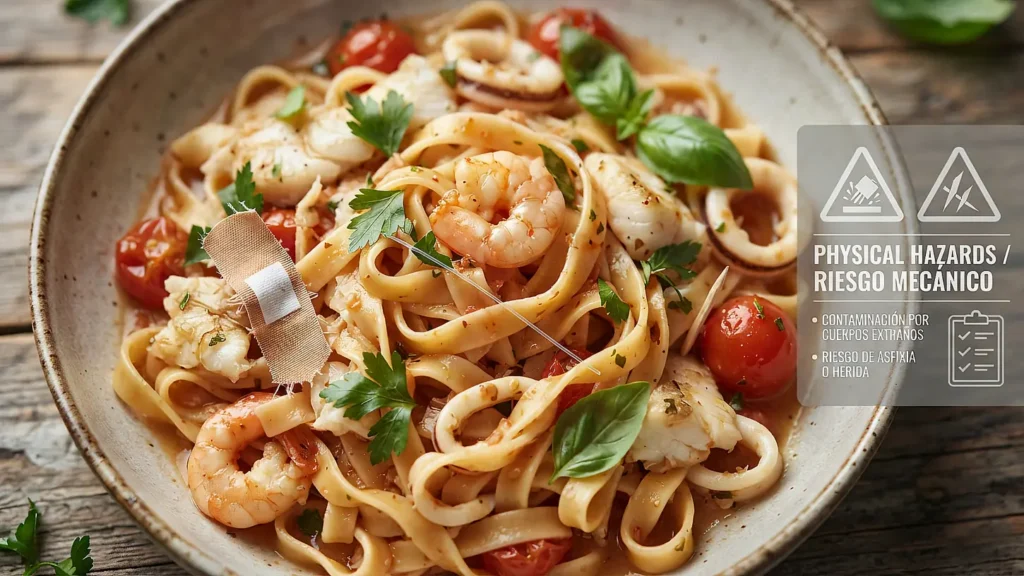
- Kitchen Vectors: Artificial or acrylic nails (a critical and recurring hazard in hospitality), false eyelashes, earrings, piercings, rings, loose chef coat buttons, and medical dressings (bandages) that lose adhesion due to kitchen humidity and hot line steam.
- Physiological Effect: Mechanical trauma upon ingestion (oral lacerations) and critical biological contamination (used bandages and the underside of false nails serve as high-risk bacterial breeding grounds).
- Kitchen Control Practice: Strict «No Jewelry, No Makeup, and Short/Unpolished Nails» policy. Mandatory coverage of any hand dressing with a food-grade nitrile glove. Exclusive use of bright blue detectable bandages, making them immediately visible if they accidentally fall onto the production line.
Cleaning Brush Bristles
Rigid fragments shed from sanitation utensils that migrate into food due to defective tools or aggressive cleaning techniques.
- Kitchen Vectors: When cleaning hot, rough surfaces like grills, flat-tops, or salamanders with wire brushes or hard plastic bristles, the bristles break off and stick to the textured ridges or grease. When the next protein (beef, chicken, burger) is placed down, the bristle adheres to the meat and travels straight to the patron’s plate.
- Physiological Effect: Grill wire bristles are extremely thin and act like surgical needles in the digestive tract, capable of causing micro-perforations in the esophagus, stomach, or intestines, requiring emergency surgical intervention.
- Kitchen Control Practice: Absolute prohibition of loose wire bristle brushes on the hot line. Replace them with volcanic pumice grill stones, certified high-temperature resistant nylon pads, or single-piece solid stainless steel scrapers.
Angelo Campione ─ FMP