ORIGIN vs. TRADITION
IN PURSUIT OF OUR GASTRONOMIC IDENTITY
Scrolling through X, I stumbled upon a post by chef Juan Carlos Torres Rengifo — an excellent Venezuelan cook, in my opinion, though by his own definition, a chef on loan to the baking world. In his post from december 10, 2012, he stated: «…There is no such thing as turkey pan de jamón. It is a massive conceptual error since ham refers strictly to a pig’s leg. And it is not our tradition!»…
I paused for a few moments to reflect on his comment and understand the intent behind his claim. Indeed, I agree with Juan that only the cooked, smoked, or cured charcuterie made from the hind legs of a pig can be strictly considered ham. Therefore, calling a turkey cold cut «ham»—regardless of which part of its anatomy it comes from—is a linguistic contradiction. However, we locked horns on X debating the second part of his message: «…And it is not our tradition!»…
Juan argued that our traditional Pan de Jamón requires smoked ham, raisins, and olives; a fact I certainly agree with. It is also traditional to diagonally layer two lards or slices of bacon when filling it. But since semantics only carried us this far, my disagreement with him lies precisely there: How do we actually define what is «traditional»?
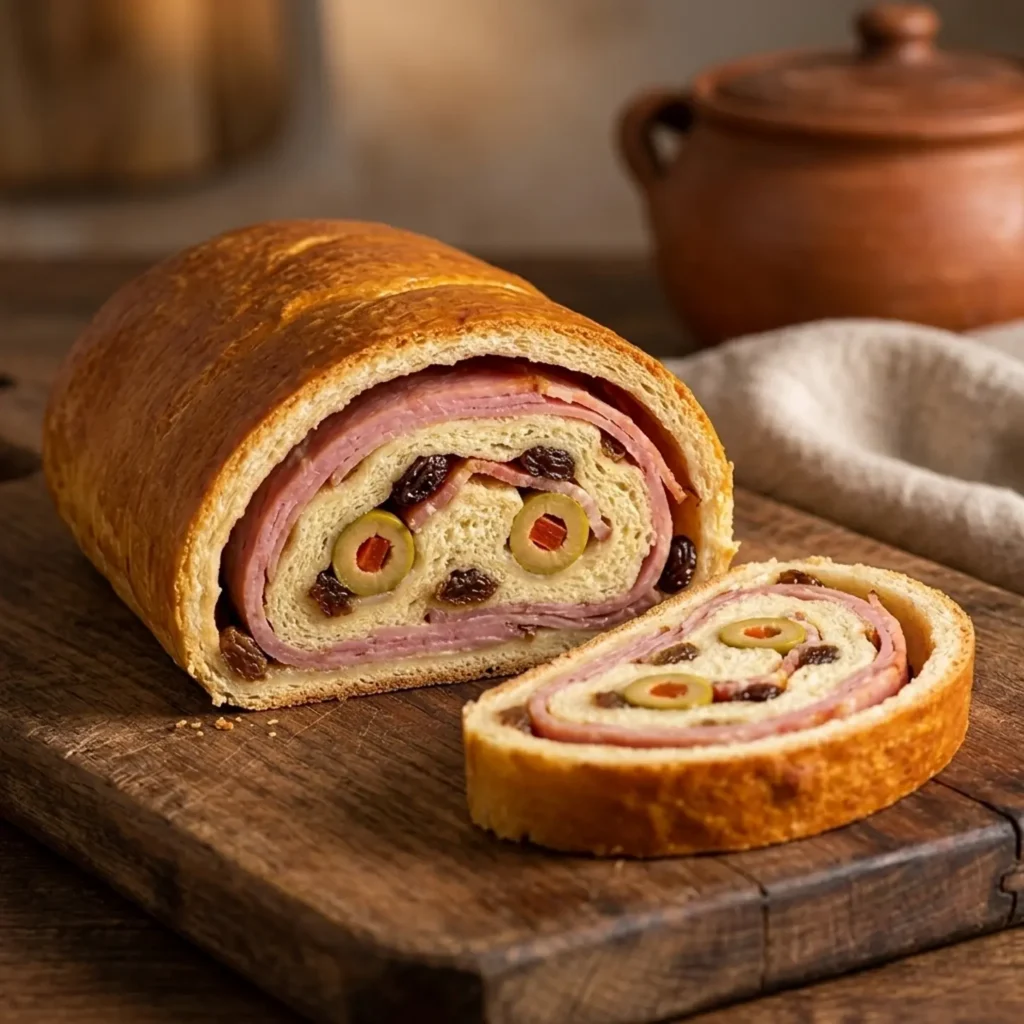
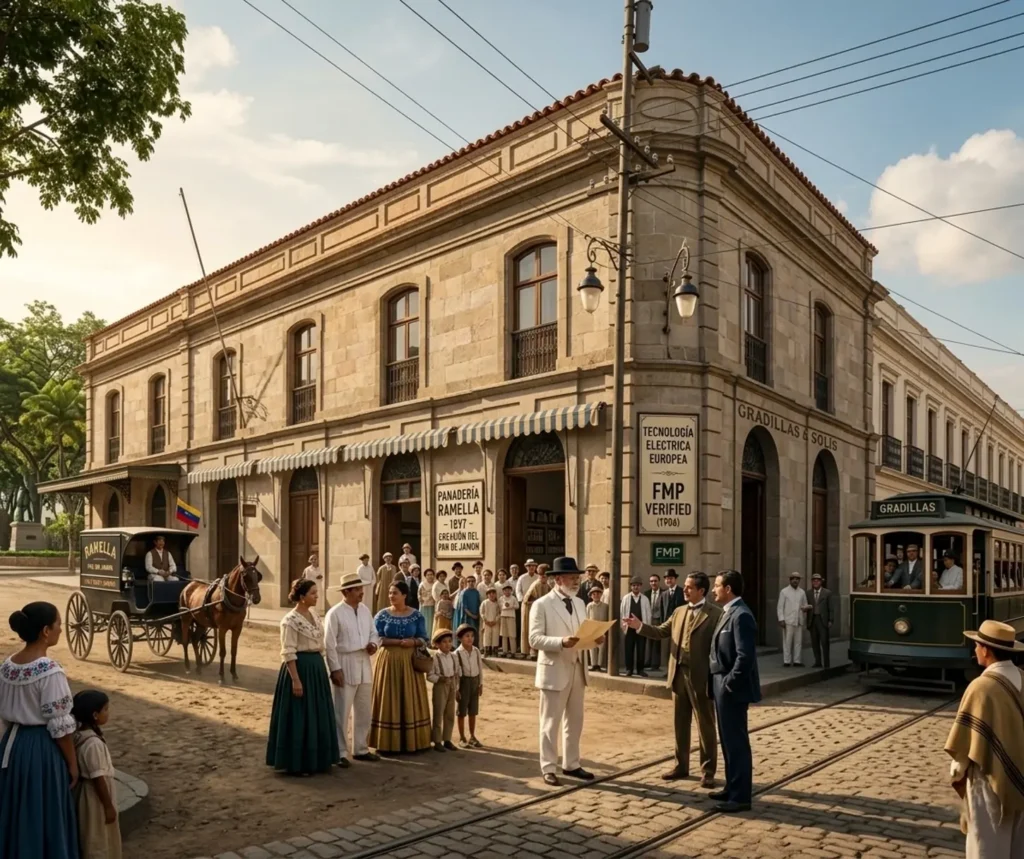
According to the dictionary, tradition is the transmission of news, customs, rites, or doctrines from generation to generation. The original baking formula and filling recipe for the Venezuelan Pan de Jamón, as documented by Miro Popic, dates back to 1905. It is credited to don Gustavo Ramella, who distributed it from his bakery in Caracas.
By 1906, his competitors—mainly the Montaubans—began distributing it as well, though back then its production wasn’t limited to the december holidays. The dough was hydrated with Lager beer, and the filling consisted of chunks of Ferris ham. It wasn’t until after 1920 that the filling was enriched with olives and raisins, followed a few years later by capers and bacon.
Returning to the debate with Juan Carlos and the matter of tradition: while the bread I just described is recognized nationwide as the traditional one, only don Gustavo’s 1905 version can be considered the original. In this same line of thought, variations filled with cooked turkey breast, cream cheese, or those made with puff pastry dough are technically neither «original» nor strictly «pan de jamón». Yet, they are traditional, simply because bakeries offer them and customers consume them year after year.
If we extend this logic to Venezuelan cuisine as a whole, we can better orient ourselves when consolidating our gastronomic identity—our country brand—before the world.
Dishes from Falcon or Zulia states, for instance, are traditional within their respective regions, but they will only become a true country brand when each and every region opens up to the rest of the nation, making them widely known and regularly consumed.
Nor can we close ourselves off to the temporal variable when identifying our traditions. Can anyone dogmatically decree between which exact years «our» cuisine developed? On what date does our gastronomic culture begin? Certainly not before acquiring our identity as a nation—but when does it end?
Today, a cook in Barinas is creating a new dish using local ingredients; that in itself makes it Venezuelan, yet it is neither recognized nor traditional. In this manner, the passage of time, continuity, unalterability, consumer preference within a specific geo-cultural context, and the widespread promotion of that content are, ultimately, what coin any «country brand-gastronomy».
We must look back into our culinary past to build that gastronomic identity without demonizing the present; and if we find little or encounter documentary gaps, let us fill them with inventiveness. What is lost, if required, must be constructed. Orthodoxy and fundamentalism yield no profitable fruits in any area of human endeavor.
Angelo Campione ─ WCCE