THE FRAUD IN CULINARY EDUCATION
DESK CHEFS AND THE EXTENSION BUSINESS
There is a truly frightening institutional negligence in most of Latin America regarding the regulation of culinary studies. We are dealing with one of the industries that employs the largest volume of labor in the region and, paradoxically, one of the least audited in its academic baseline. Every time a diner sits down at the table of a public establishment, they expose themselves to a level of biological and sanitary risk perfectly comparable to that of hospital services. The latent threat of pathogens, cross-contamination, and FBIs (Foodborne Illnesses) should compel States to demand from their departments of agriculture, health, education, tourism, and industry and commerce, a sky-high technical standard that protects public health; however, what prevails is a regulatory vacuum and institutional complacency.
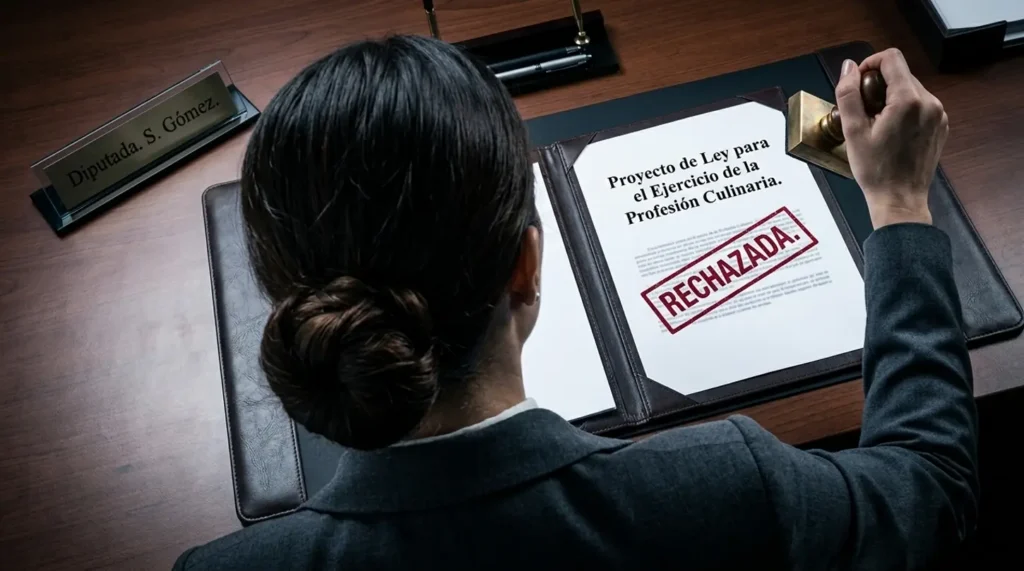
Of course, it is not a matter of falling into the bureaucratic trap of granting professional exclusivity and a legal monopoly over the activity to whoever holds a university degree. Such a legal blunder would deal a death blow to millions of empirical workers who sustain the day-to-day operations of the sector. The correct path follows the logic of the construction sector: on a job site, eighty percent of the manual labor force might not have moved past primary or secondary education, but that does not disqualify them from operating successfully because they act under the strict supervision of engineers, architects, and an army of specialized technicians. Restoration demands an analogous system, a regulatory framework that weighs the mandatory presence of trained technical personnel with verified professional experience based on the business’s impact: calculating the volume of diners the service handles, the complexity of its line, and its geographical location. Only then would food safety be guaranteed and the sector’s wage grid be economically valued.
Instead of leading this structural transformation, the traditional academic apparatus has preferred to capitalize on snobbery. In the last two decades, a false perception has emerged that universities finally respect and embrace gastronomy. Nothing could be further from operational reality. Institutions of higher education have not opened their doors because they believe in the professionalization of cooking; they simply detected the media trending of culinary activity and designed a cash-capture scheme under the fraudulent format of “non-degree-granting extension studies”. These programs are explicitly designed not to lead to any auditable professional outcome, operating with the sole purpose of lining the pockets of deans and shareholders of private universities.
But the true core of the fraud lies in the farce of their lecture halls. Almost the entire faculty is composed of a fauna identical to that of the briefcase consultant: nutritionists incapable of cooking or understanding the chemistry of food transformation viewed from the heat of a pan or an oven; cost professors who have never managed a restaurant’s inventory; sanitary instructors who have only dealt with pathogens from the sterile glass of a microscope; and personnel managers who do not have the slightest idea how to handle the tensions of a hospitality or real kitchen employee. These are individuals completely ignorant of the fundamentals of a five-star service because they have spent their lives sheltered in mellifluous conversations, generating academic debates of zero value with other colleagues in a flagrant pantomima of mutual adulation.

Sustaining the future of foodservice on express diplomas taught by these classroom bureaucrats is to perpetuate managerial illiteracy. The market is flooded with graduates who master the rhetoric of the plating tweezers but are incapable of auditing a grease trap or designing a sanitary risk map. It is time to smash this educational scam against the concrete of daily reality: the kitchen is not an extension of university literature nor a public relations accessory to capture enrollments. It is a technical discipline of high civil liability, defended by controlling processes, standardizing food safety, and managing costs from the trenches of a real operation, far from the sterile romanticism of classrooms.
Angelo Campione