THE BRIEFCASE CONSULTANT
AND THE CEMETERY OF KILOMETRIC MENUS
There is a silent and corporate plague bleeding the financial balances of the restaurant industry with staggering impunity: the briefcase gastronomic consultant. We have been sold these characters as the messiahs of modern management—office strategists who, armed with a prefabricated digital template and zero experience in the trenches of a dispatch line, promise to save any business. However, when the trail of their consultancies is audited, the only thing we discover is a cemetery of sunken projects under the dead weight of endless lists and kilometric menus.
I will rely on an analogy to illustrate my argument. Imagine a dog trainer, the most capable in the sector, applying the methodology that constitutes the core of his success to train lions, tigers, and sharks. It is not that the gastronomic business is untamable; the aggressive expiration margin of ingredients and the countless variables that daily put the health and lives of diners and employees at risk are predatory. Managing in the hardware branch, the banking sector, or the oil industry does not qualify you to succeed in the hospitality industry.
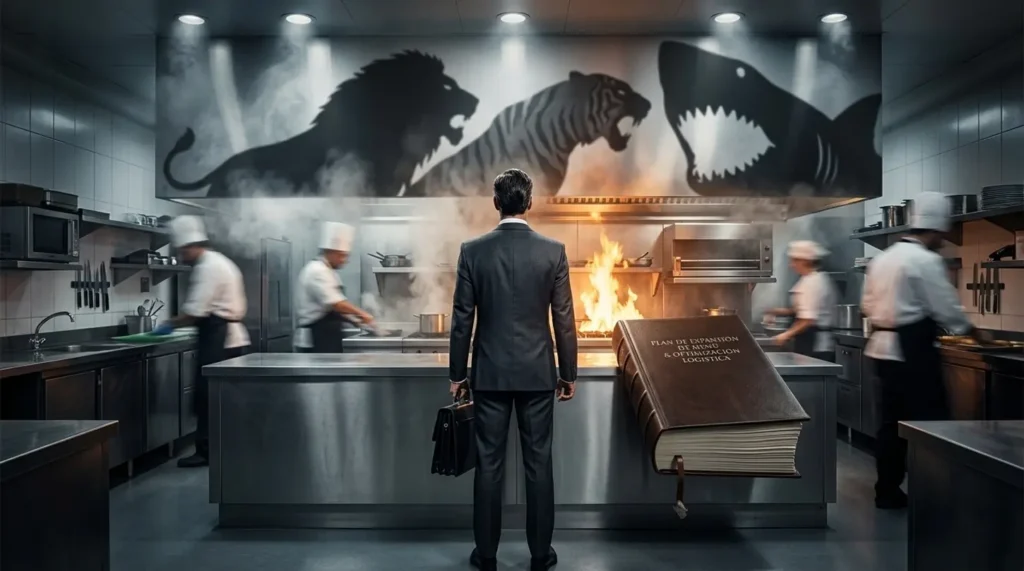
The modus operandi of these smoke sellers is as predictable as it is destructive. Their first great stroke of genius to «attract market share» is usually the design of hypertrophied menus that pretend to please every demographic spectrum simultaneously. They design absurd eighty-dish menus where sushi, pizza, aged meat cuts, al dente pastas, and high-end desserts coexist in a heretical logistical orgy. This is operational illiteracy elevated to the status of brand strategy. Expecting a single kitchen to respond with technical consistency to such culinary dispersion is a desk fantasy that ignores the most basic laws of food physics and staff performance.
Where the briefcase consultant sees «variety and competitive advantage», the real manager immediately detects a financial suicide, a nightmare of multiple training tracks, and a circus of standardized operating procedures (SOPs), individualized by type of preparation. A kilometric menu is, by definition, a chronic multiplier of hidden waste and the sworn enemy of Food Cost Control. Maintaining the stock necessary to sustain eighty liquid and solid references forces the storage space to burst and pulverizes inventory turnover. The FIFO (First In, First Out) system completely collapses in the walk-ins. Proteins end up freezer-burned from prolonged storage, vegetables rot waiting for their dispatch quadrant, and the owner’s working capital dissolves into tons of stock that will never see the light of the main dining room.
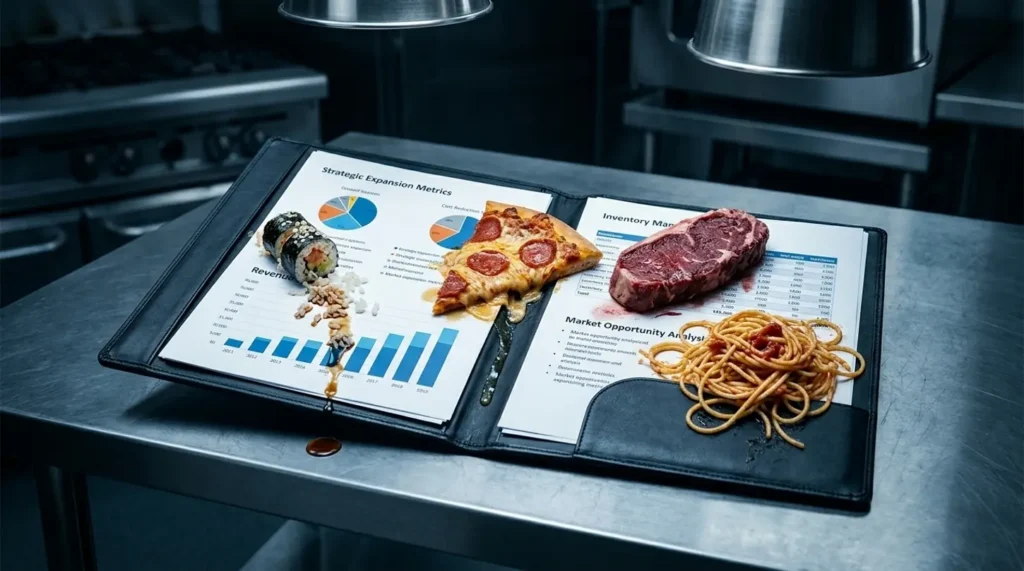
Sustaining the viability of a restaurant on the Excel projections of an advisor who has never cleaned a grease trap or costed a recipe in the middle of a supply shortage is a sign of profound managerial docility. The profitability of a serious culinary operation is not decreed by expanding the menu to infinity, but by applying the scalpel of menu engineering to concentrate volume on high-turnover items with controlled margins. It is time to slap briefcase romanticism with the rawness of daily inventory: an efficient restaurant is managed from tight storeroom control and line consistency, not from the pretentious folders of an office guru. Everything else is cheap literature to feed the operational cemetery.
Angelo Campione